
Introduction
PicoWay may help selected people with melasma. It is not automatically the best choice, not a guaranteed cure, and not a substitute for a proper diagnosis and ongoing pigment management.
Melasma tends to come back. In a 20-person US study of a fractional PicoWay handpiece, image-rated improvement was 37% at 3 months but fell to 27% at 8 months. That drop captures the central problem.
This article covers how PicoWay works, what the research says, who may benefit, the risks for skin of color, what treatment looks like, cost factors, and how it compares with other options.
It comes from the Pico Laser Buyer's Guide, an independent educational resource. We are not a treatment provider, and this is not an endorsement of PicoWay.
Key Takeaways
- Melasma has hormonal, UV, visible-light, inflammatory, and genetic drivers that a laser cannot remove.
- Picosecond pulses work mainly through a photoacoustic effect, but the treatment still carries risk.
- The evidence is promising yet small, short-term, and mixed in quality.
- Diagnosis, conservative settings, sun protection, and provider experience matter as much as the brand.
What Is PicoWay Laser and How Does It Work for Melasma?
What the picosecond mechanism does
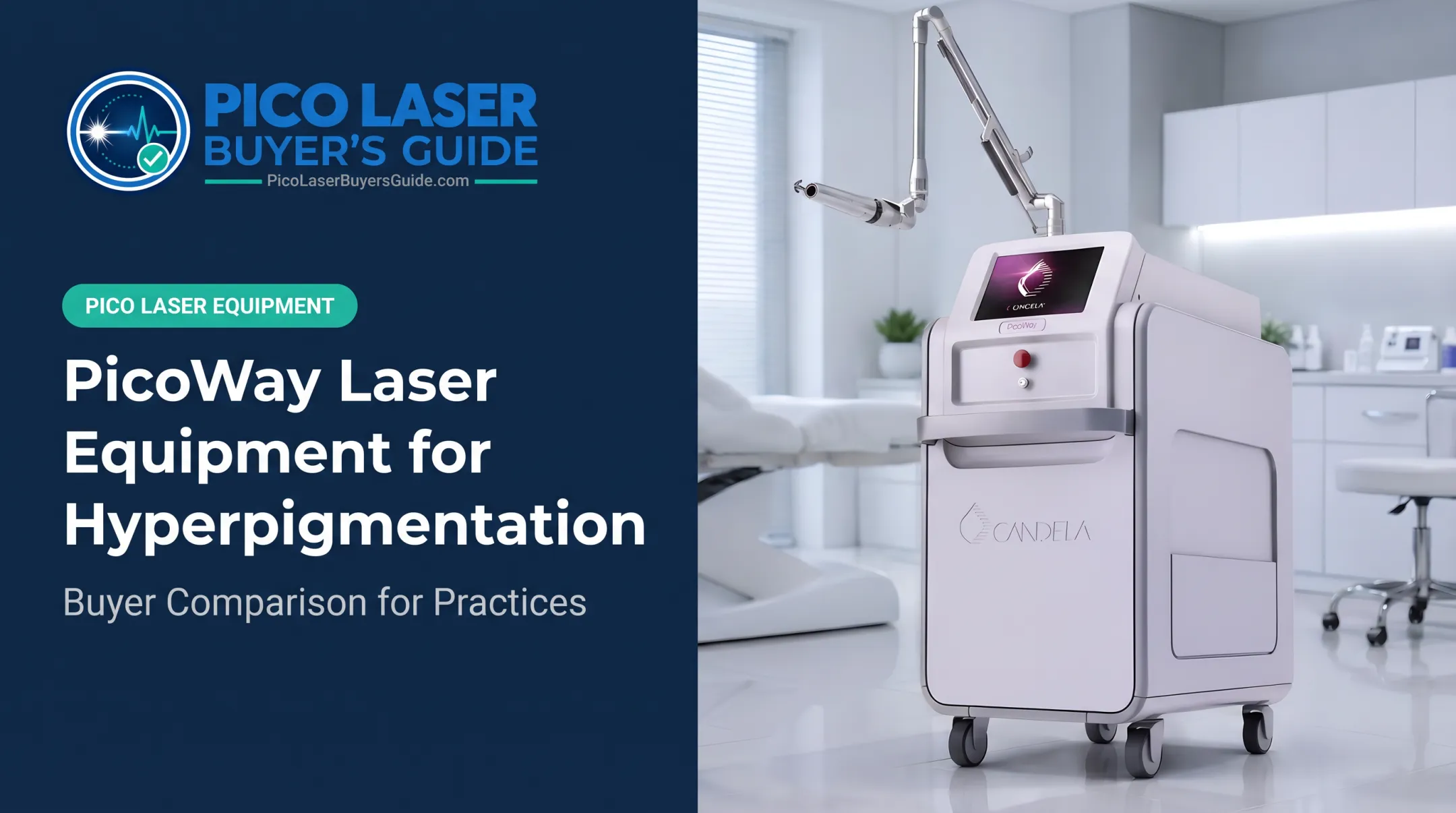
A picosecond is one trillionth of a second; a nanosecond is one billionth of a second. PicoWay's FDA-listed pulse range is 240-500 ps. These pulses deliver energy so fast that pigment shatters through a photoacoustic (photomechanical) effect, and the body then clears the fragments.

Candela describes the effect as predominantly photoacoustic with lesser photothermal effects. That is not zero heat. Excess energy, repeated passes, or poor settings can still irritate skin and trigger post-inflammatory hyperpigmentation (PIH).
The laser targets existing pigment. It does not change the tendency of melanocytes to overproduce it.
Why wavelength and handpiece selection matters
Current US PicoWay applicators include:
- Zoom full-beam at 532/1064 nm
- Full-beam 730 nm and 785 nm
- Resolve fractional microbeams at 532/1064 nm
- Resolve Fusion at 532 nm, with microbeams and surrounding diffuse rings
Per FDA clearance K220853, melasma is specified for:
- Resolve 1064 nm
- Resolve Fusion 532 nm
- A separately listed 1064 nm system indication
All three apply to Fitzpatrick I-IV. The 730 and 785 nm wavelengths should not inherit that indication. Verify any configuration against current manufacturer documentation.
Wavelength, depth, spot size, fluence, repetition rate, density, and cooling all need matching to pigment depth, skin type, and goal. No universal protocol exists.
What melasma is, and what it is not
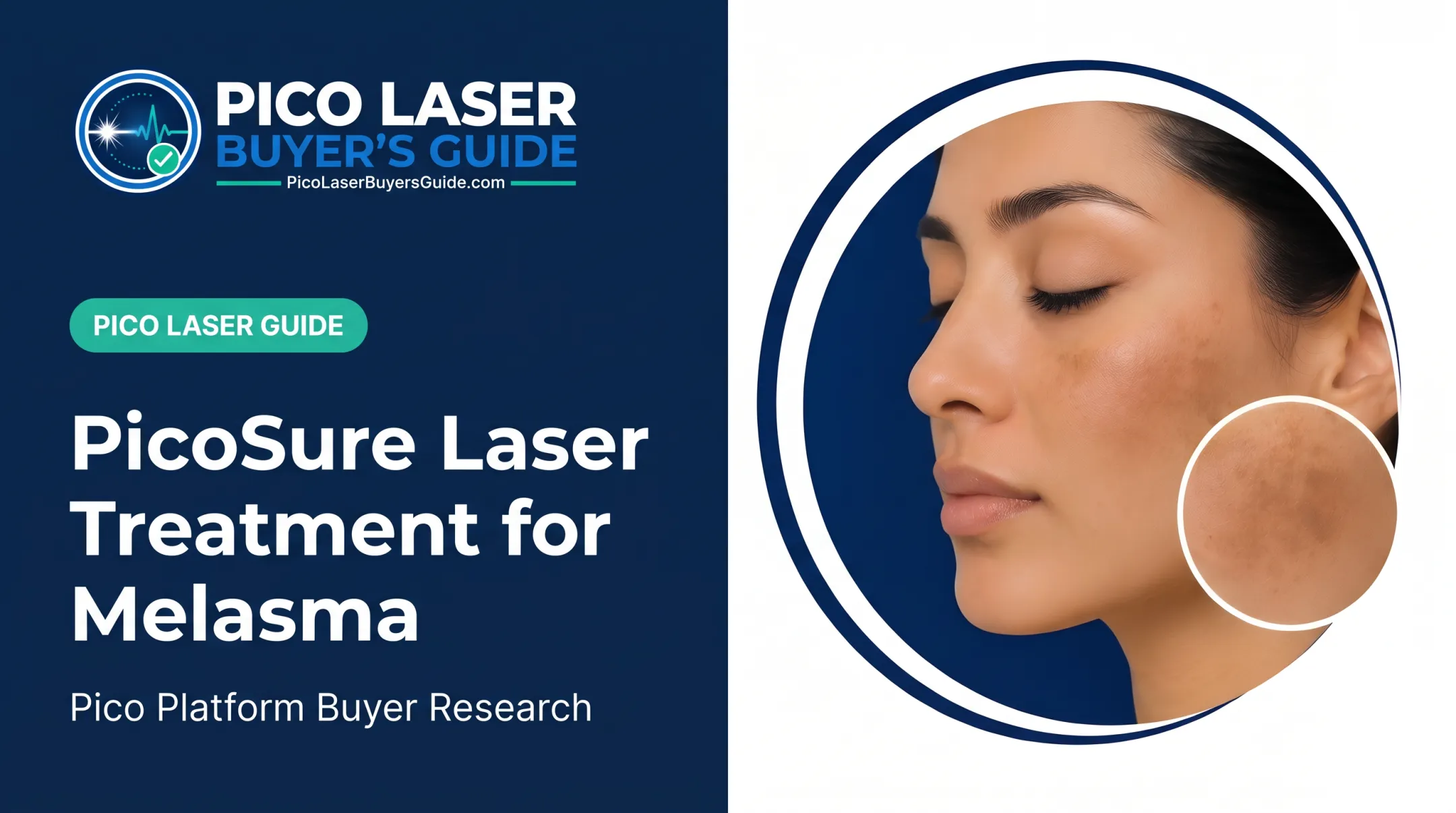
Melasma is a chronic, patterned facial hyperpigmentation. It must be separated from look-alikes:
- Solar lentigines: discrete, well-demarcated macules
- PIH: follows acne, eczema, or injury
- Hori's nevus: bilateral blue-gray zygomatic pigment
- Café-au-lait macules: usually congenital, well-circumscribed
The American Academy of Dermatology lists clinical examination, Wood's lamp, and dermoscopy as diagnostic tools, with biopsy occasionally needed. Wood's lamp depth classification is imperfect, since seemingly epidermal disease can hide dermal pigment. That is why a clinician, not a device brochure, decides whether PicoWay fits.
How Effective Is PicoWay for Melasma?
What current clinical evidence shows
Two studies matter most, and they differ a lot.
| Bernstein et al., 2023 (US) | Feng et al., 2023 (Beijing) | |
|---|---|---|
| Design | Single cohort, no comparison arm | Randomized, assessor-blinded, three arms |
| Participants | 20 adults; types III (8), IV (10), V (1), VI (1) | 59 analyzed; types III-IV |
| Protocol | Fractional 1064 nm, four monthly sessions | Nonfractional 1064 nm, three sessions four weeks apart |
| Result | 37% image-rated improvement at 3 months, 27% at 8 | MASI improvement of 35.9% (PicoWay), 25.5% (PicoSure 755 nm), 24.0% (2% hydroquinone) |
| Recurrence | No standardized rate reported | PicoWay 5.0%, PicoSure 10.0%, hydroquinone 5.3% |
| Funding | Not reported; independence unconfirmed | Public funds; no commercial conflicts declared |
A 2023 meta-analysis of six trials found overall picosecond benefit but high heterogeneity (I²=70%). It pooled several wavelengths and was not PicoWay-specific. The 755 nm subgroup did not clearly beat topical lighteners.
Regulatory clearance is not proof of superiority
FDA 510(k) clearance means substantial equivalence to an existing device. It does not show superiority, guaranteed efficacy, or permanence. PicoWay was first cleared in 2014 for tattoo removal, and melasma was added in 2022.
What the results can and cannot mean
Average improvement hides individual variation. Skin type, subtype, baseline severity, hormones, and protocol all shift outcomes. The US cohort included just one type V and one type VI participant, so the I-IV melasma indication should not be stretched to darker skin.
Tattoo and lentigine clearance data also cannot stand in for melasma efficacy. Those indications have a longer record and a very different biology.
Who may benefit, and when to reconsider
Candidates typically have:
- A confirmed melasma diagnosis
- Persistent pigment despite appropriate medical therapy
- Realistic expectations
- Willingness to follow sun-protection and aftercare rules
A clinician may defer laser when any of the following apply:
- Uncertain diagnosis
- Active irritation or infection
- Recent tanning
- Uncontrolled triggers
- High PIH risk
- Expectations of instant permanent clearance
Where PicoWay Fits in a Complete Melasma Treatment Plan
Start with diagnosis and foundational management
Before any laser, a clinician should assess pigment distribution and depth, mixed conditions, hormonal or medication triggers, skincare irritation, and sun and visible-light exposure.
The AAD frames first-line care as sun protection plus topical medication. Key points:
- Broad-spectrum SPF 30 or higher; tinted iron-oxide products help against visible light
- Hydroquinone and triple-combination cream are the best-studied topicals
- The triple-combination label covers short-term use, not maintenance
- Tranexamic acid is considered when other treatments fail, with screening for clot history
None of these suits everyone. A prescriber decides.
When laser may be added
The AAD positions lasers as an add-on to medication and sun protection. A 2024 review mostly reserves devices for refractory or recurrent disease. The AAD expects response to take 3-12 months, and no universal waiting period is set before escalating.
Published evidence for PicoWay combined with TXA or hydroquinone is limited; the US PicoWay study had no multimodality arm.
Maintenance and recurrence planning
PicoWay may reduce existing pigment but cannot prevent new melasma from sun, visible light, heat, hormones, or inflammation. Plan for ongoing photoprotection, follow-up assessment, and a maintenance strategy. No universal number of maintenance sessions is established.

PicoWay Safety and Skin-of-Color Considerations
Why skin of color requires additional caution
Higher epidermal melanin and a stronger tendency toward PIH make conservative planning essential in Fitzpatrick III-VI. At 532 nm, strong melanin absorption calls for particular caution on darker skin.
Reported figures are limited:
- In the randomized trial, PIH occurred in 1/20 PicoWay patients, 1/20 PicoSure, and 1/19 hydroquinone; it resolved within 1-6 months
- Q-switched Nd:YAG literature reports hypopigmentation, particularly in types III-V
- Reliable PicoWay-melasma rates for hypopigmentation, blistering, and scarring are not established
A low-thermal approach may reduce some heat risks. It does not make PicoWay automatically safe for every skin tone.
Common side effects and clinical risks
In the US study, every subject had erythema, 40% had mild edema, and petechiae occurred after 6.2% of treatments, typically resolving in 1-3 days. Patients also commonly report swelling, sensitivity, and temporary darkening.

Blistering, infection, scarring, and lasting pigment change are complications that need prompt medical review. Risks rise with excessive fluence, overlapping passes, treating active inflammation, or using a protocol built for another pigment condition. Undertreatment wastes sessions too.
Safer treatment planning
Ask about:
- Test spots (the US study used immediate and one-month spots)
- Conservative starting parameters and gradual escalation
- Cooling and treatment spacing
- Standardized photography and informed consent
- A plan for managing pigment changes
- Melasma and skin-of-color experience
- Clear rationale for the chosen wavelength and settings
- Pairing with ongoing medical management
A licensed, trained professional who can diagnose pigmentary disease and handle complications should perform the treatment.
What to Expect From PicoWay Treatment: Sessions, Cost, and Alternatives
Consultation, session, and recovery
A good consultation covers:
- Diagnosis and history
- Skin assessment and goals
- Photography and alternatives
- Eye protection and comfort measures
- Individualized settings
Sensation, appointment length, redness, swelling, makeup timing, and skincare limits vary by area, settings, sensitivity, and provider protocol. Treat any fixed timeline with suspicion.
Treatment course, maintenance, and cost
The two published protocols used 3-4 sessions about four weeks apart. That is a study range, not a standard course. Session count depends on subtype, depth, response, parameters, and combined care.
No authoritative US average exists for PicoWay melasma treatment. The American Society of Plastic Surgeons cites practitioner expertise, procedure type, treatment time, and geography as cost drivers. Also consider:
- Full-face versus spot treatment
- Consultation fees and package pricing
- Maintenance visits
- Whether medical skincare is included
Comparing PicoWay with other options
| Option | Melasma evidence | Key caution |
|---|---|---|
| PicoSure | Direct trial favored PicoWay 1064 nm on week-24 MASI | Tested the 755 nm configuration only |
| Q-switched Nd:YAG | Small split-face trial (18 people): no difference between picosecond and nanosecond; 12.5% recurrence each side | Picosecond was less painful; brand and funding unclear |
| IPL | Some benefit with topical combinations | PIH, rebound; may not help alone |
| Chemical peels | Mixed results; equal or inferior to topicals overall | Higher adverse-effect risk |
| Medical topicals | Hydroquinone and triple combination remain benchmarks | The PicoWay trial used 2% hydroquinone only |
No laser is universally best.
For clinical buyers
Verify:
- Exact model, handpieces, and wavelengths
- FDA documentation and published evidence
- Service and training support
- Indications
- Total cost of ownership
Candela's own planning range for a well-configured new PicoWay is $250,000-$325,000, with options and training shifting the price. Written quotes control.
PicoWay emphasizes wavelength breadth; PicoSure Pro rests on native 755 nm Alexandrite heritage. Those engineering differences do not translate into a clinical ranking. The Pico Laser Buyer's Guide compares manufacturer-backed specifications and regulatory documentation across platforms as an independent educational resource.
Frequently Asked Questions
How much does PicoWay laser treatment cost?
US pricing varies by treatment area, provider, location, number of sessions, consultation fees, and maintenance needs. Request an itemized treatment plan before committing.
How does PicoWay laser work?
It delivers picosecond pulses that fragment pigment photoacoustically. Wavelength and handpiece choice shape the effect, but it does not remove melasma's underlying drivers.
How many PicoWay treatments are typically needed for melasma?
There is no universal number. Published protocols used three or four sessions, but the number depends on subtype, skin type, protocol, response, and maintenance needs.
Is PicoWay laser effective for treating melasma and hyperpigmentation?
Evidence is promising but variable, and melasma differs from other hyperpigmentation. PicoWay is generally one part of a broader management plan.
What lasers should be avoided for melasma?
No blanket list fits everyone. Aggressive, high-heat, or poorly parameterized treatments raise pigment complication risk, so get a diagnosis and individualized assessment first.
What are the key differences between PicoWay and PicoSure?
PicoWay offers 532, 730, 785, and 1064 nm with full-beam and fractional handpieces. PicoSure Pro centers on 755 nm with optional 532/1064 nm. Neither is universally better, and results depend on provider-selected protocols.