This guide covers professional systems only, with a focus on picosecond and multi-wavelength platforms. It skips consumer handhelds and home-removal products. You'll learn how to spot genuinely new brands, compare specifications, verify FDA 510(k) records, test vendor support, and calculate total cost of ownership.
Key Takeaways
- Compare wavelengths, energy, spot sizes, evidence, and support, not pulse duration or price alone.
- Verify every claim against FDA records for the exact model and configuration.
- Count installation, training, warranty, service, parts, and downtime in the price.
- Match the platform to your ink mix, skin types, volume, and operators.
New and Emerging Laser Brands Worth Researching
"New" needs a definition. Here it means a recent U.S. clearance or market entry, a major platform redesign, or a manufacturer new to tattoo removal. Dates below are FDA decisions, not launch dates.
Recent Entrants
- Boston PICO (Boston Aesthetics): FDA 510(k) K251981, January 2026. 1064/532 nm, 250 ps, 2-10 mm zoom, up to 10 Hz.
- PICOALEX (WON TECH): K243957, March 2025. 755 nm alexandrite, 600-800 ps, listed for tattoo removal and benign pigment.
- Aesthetika PicoTech: cleared May 2025 for its 1064/532 nm configuration, roughly 350 ps, up to 800 mJ, listed near $60,000. U.S. sales reportedly began in 2026, with six units sold by August 2026.
- Fotona StarWalker PICO Pro: native 1064/532 nm, optional 585/650 nm handpieces, 300-400 ps, up to 800 mJ, spots up to 10 mm.
- PicoCare Majesty (Wontech): K241144, 1064/532 nm with optional dye handpieces.
Whether newcomers are rebranded or white-label devices is not established in FDA records or manufacturer pages. Ask the vendor directly, and get the answer in writing.
Cleared Versus Marketed
The distinction matters most with multi-wavelength packages. PicoTech's clearance covers 1064/532 nm. Its 755, 585, and 650 nm handpieces are not cited as cleared, so treat their color claims as unverified until you see configuration-specific labeling.
Pigment guidance by wavelength, from the clinical literature:
| Wavelength | Typical targets | Skin-type note |
|---|---|---|
| 1064 nm | Black, dark blue | Preferred in darker skin |
| 532 nm | Red, orange | Cleared for types I-III on several devices |
| 755 nm | Blue, green | Higher pigment-change risk in darker skin |
| 694 nm | Blue, green, purple | Higher hypopigmentation risk in dark skin |
Benchmarks, Not Newcomers
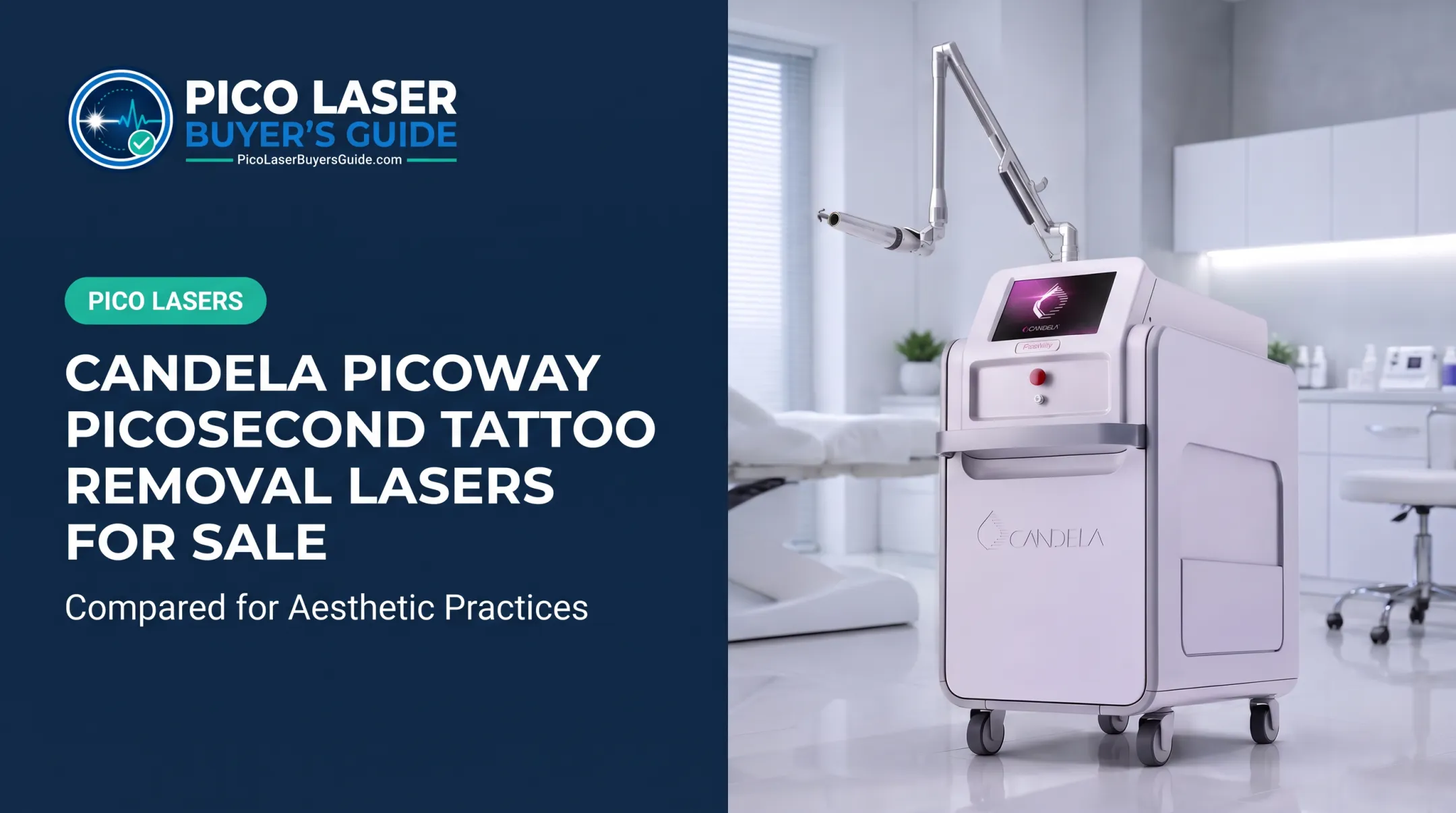
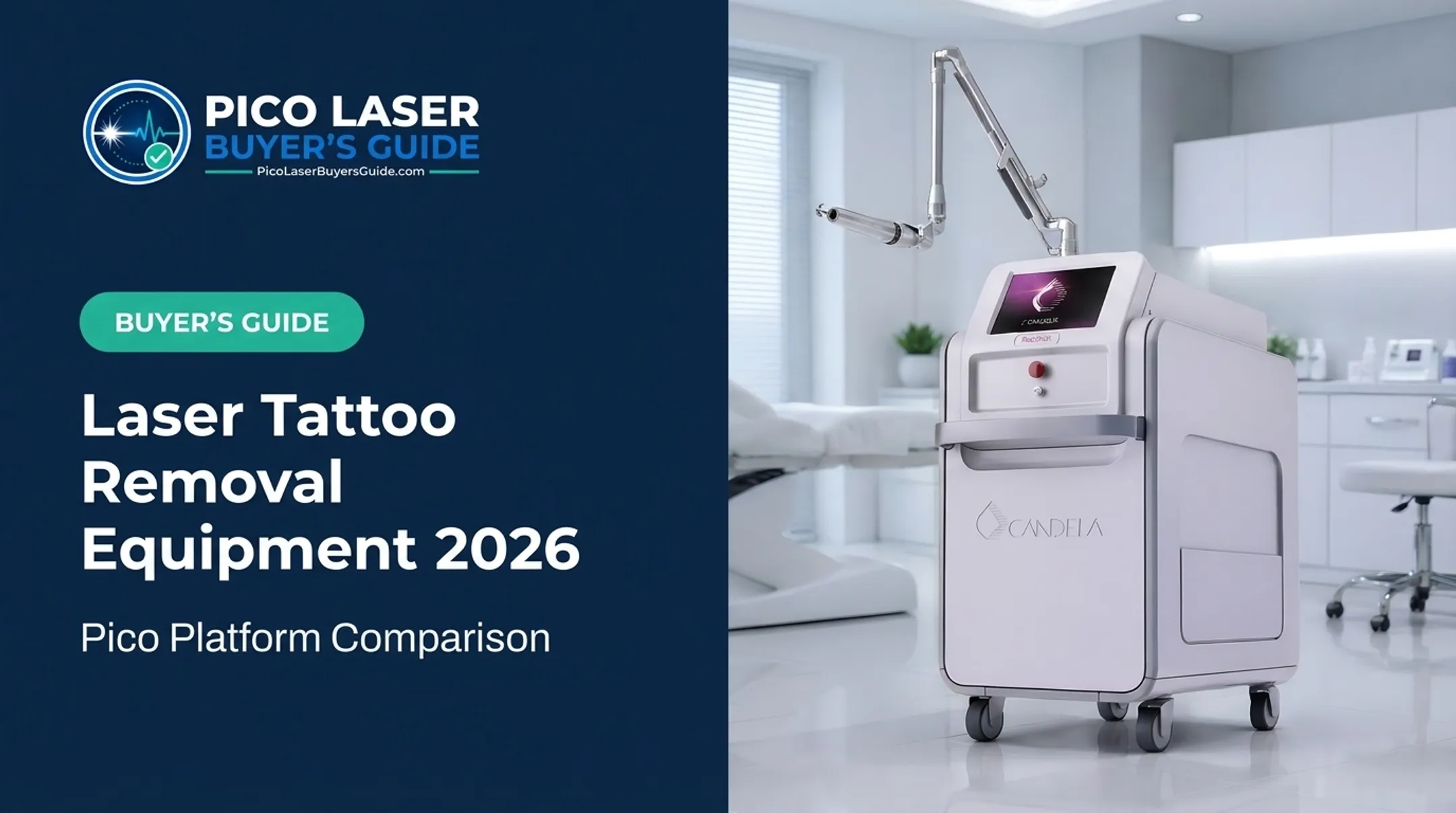
Use established systems as reference points: Candela PicoWay (K220853, four wavelengths, 240-500 ps), Cynosure PicoSure Pro (755 nm nominal, 500-900 ps, optional 532/1064), and Quanta Discovery Pico (532/1064 pico plus nanosecond modes).
Cosmetic-pigment indication documents for the newer candidates are hard to find, so request them from vendors.
How to Evaluate a New Tattoo Removal Laser Brand
Pulse Duration and Mechanism
Picosecond pulses target pigment relaxation times below 10 ns, which is why researchers began investigating them. Short pulses cause rapid heating and photoacoustic injury; that is a thermal process. Be skeptical of "cold laser" or "no heat" language and ask for documentation.
The head-to-head evidence is mixed:
- A 49-patient randomized study found at least 75% color reduction in 33% of picosecond halves versus 14% of nanosecond halves.
- A 23-subject split study found no significant clearance difference, though picosecond treatment hurt less.
Both studies differ in wavelengths and thresholds, so neither settles the question for a specific brand.

Wavelengths, Energy, and Spot Sizes
Ask which wavelengths ship in the base price and which need add-on modules. Then check:
- Maximum fluence and repetition rate at each wavelength, not just the headline figure
- Adjustable spot sizes (2-10 mm is common) so settings can change as ink fades
- Fractional or microlens options, and whether they are cleared for your intended use
Nominal specs are not verified output. One PicoTech test recorded roughly 823-830 mJ against an 800 mJ rating, but it did not validate pulse duration, other wavelengths, beam uniformity, or clinical outcomes.
Cooling, Ergonomics, and Workflow
Many product records don't state a skin-cooling method, so ask for it explicitly. Then verify workflow fit:
- Handpiece weight and interface usability
- Warm-up time (PicoTech lists under 20 seconds)
- Footprint and electrical needs (PicoWay requires dedicated 200-240 VAC)
- Noise level across a full treatment schedule
Evidence and Secondary Uses
Separate three claim levels:
- Technically possible
- FDA cleared
- Clinically validated
Cleared uses vary by device. Boston PICO lists benign pigment and microbeam wrinkle indications; PICOALEX's cited clearance does not list acne scars or wrinkles. Never assume an indication transfers between models.
Regulatory, Service, and Total-Cost Checks Before Purchase
FDA and State Rules
A 510(k) shows substantial equivalence to a legally marketed predicate, not clinical superiority. Search the FDA database for the exact model, then read the enclosure for cleared wavelengths, skin types, and handpieces.
State rules differ sharply:
- California: physician-owned practice or professional corporation with a physician-majority shareholder.
- New York: laser tattoo treatment is the practice of medicine, with specified supervision.
- Texas: DSHS registration for Class 3B/4 laser businesses.
- Arizona: certified technicians, supervision requirements, and a designated laser safety officer.
- Florida: the Board says the Medical Practice Act has no rules directly addressing tattoo removal, which doesn't mean nothing else applies.
Confirm ownership, supervision, and laser safety officer rules with your state authority and qualified counsel.
Total Cost of Ownership
The quote is the start. Build the full picture with shipping, installation, training, financing, handpieces, service contracts, calibration, insurance, and downtime.
Price ranges from the Pico Laser Buyer's Guide:
- PicoCare Majesty: $100,000-$150,000
- PicoLO Premium: $120,000-$170,000
- PICOHI 300: $95,000 (advertised)
Independent data on breakdown frequency, repair cost, or resale retention is hard to find for any system, so no one can honestly name the lowest-cost platform. Run the break-even math instead: monthly ownership cost divided by contribution margin per treatment. At a $375 margin, $5,000 a month means 14 treatments monthly.

Warranty and Support
Compare length, exclusions, start date, travel and labor coverage, and who services the machine. Examples:
- Candela: one-year warranty on new devices, with post-warranty ServicePlus plans.
- Astanza: a published three-business-day return-to-working-condition guarantee.
- PicoTech: two-year limited warranty, onsite installation, one day of training, first-year preventive maintenance, distributor-dependent service.
Validate Before You Sign
Before you sign, request:
- A live demo and sample protocols
- References from comparable clinics
- Written specifications
- A plain answer on what happens when the system or a part fails
New Brands vs. Established Laser Platforms
Newer brands may offer updated design, modular wavelengths, and lower entry cost. PicoTech's $60,000 listing compares with roughly $150,000-$220,000 for PicoSure Pro and $150,000-$210,000 for PicoWay.
The tradeoff is a thin track record. With six U.S. PicoTech units reportedly sold by August 2026, there's little evidence on reliability, service demand, or resale. Established systems such as PicoWay offer a mature service network, clinical training, and broad cleared coverage.
When does each fit?
- First-time med spa or growing tattoo clinic: a newer platform can work if the seller documents configuration, accessories, clearances, output measurements, and service terms in writing.
- High-volume practice: an established platform usually suits better when documented uptime and long-term support drive revenue.
- Expanding practice: weigh the secondary indications you'll actually sell against the support gap.
Brand recognition doesn't replace due diligence in either direction.
Build a Shortlist for Your Clinic
Start with your profile: expected volume, common ink colors, patient skin types, treatment sizes, capital, and whether secondary treatments matter commercially.

Then build a weighted scorecard covering:
- Regulatory status for the exact configuration
- Wavelengths and pulse technology
- Clinical evidence
- Ergonomics
- Purchase price and ongoing costs
- Training, service, and warranty
- Downtime risk and resale prospects
The Pico Laser Buyer's Guide compares 15+ data points across platforms using manufacturer-backed sources, giving you a transparent baseline for comparison. Downtime and resale figures aren't documented there, so score those from vendor answers.
Ask every vendor the same questions and keep the written replies for procurement records:
- Configuration and cleared indications
- Training, support, and service response
- Parts, maintenance, and financing
- Independent outcome data
Frequently Asked Questions
How long does a tattoo fade after laser removal?
Fading continues between sessions as the immune system clears fragmented ink. Timing depends on color, density, location, skin type, and settings. The FDA notes complete removal may take many treatments and may not be possible.
How does laser tattoo removal work?
Wavelength-specific pulses are absorbed by pigment and fragment the ink. The body then clears the particles over time. This mechanism is common to all brands.
How long do you wait between treatments?
Intervals typically run six to eight weeks, allowing healing and ink clearance. A qualified clinician sets the schedule based on skin response, device, and treatment area.
What laser wavelength is best for tattoo removal?
None is best for every tattoo. 1064 nm targets black and dark blue, 532 nm red and orange, and 755 nm blue and green. Verify the exact device's cleared uses.
Are picosecond lasers better than nanosecond lasers?
Evidence is mixed. Some trials favor picosecond clearance and comfort; others show no significant clearance difference. Neither guarantees fewer sessions or complete removal.
What should I ask before buying a new tattoo removal laser?
Ask for FDA documentation for the exact configuration, wavelengths, specifications, training, warranty, service response, parts availability, evidence, total cost, and references from comparable U.S. practices.