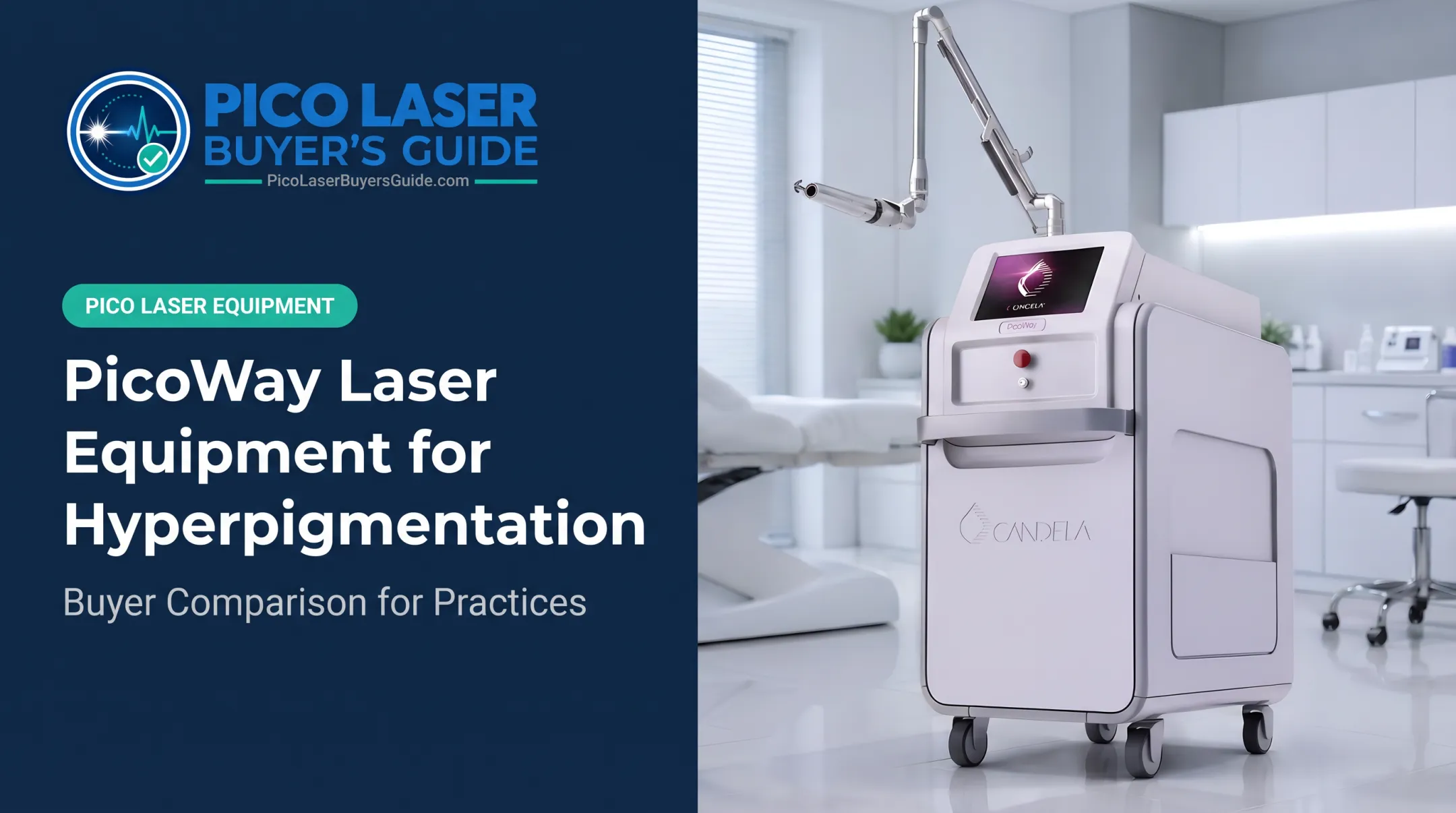
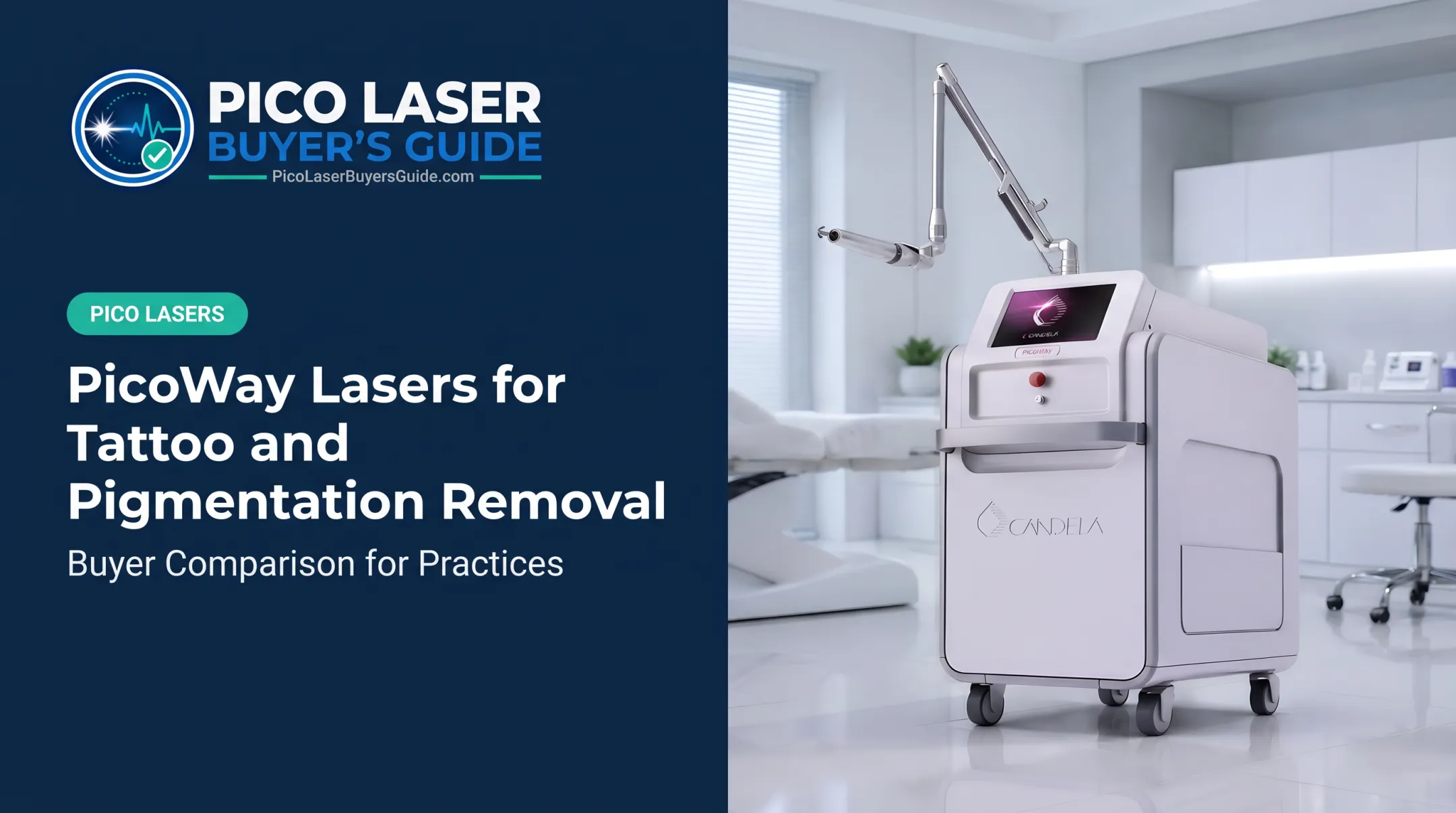
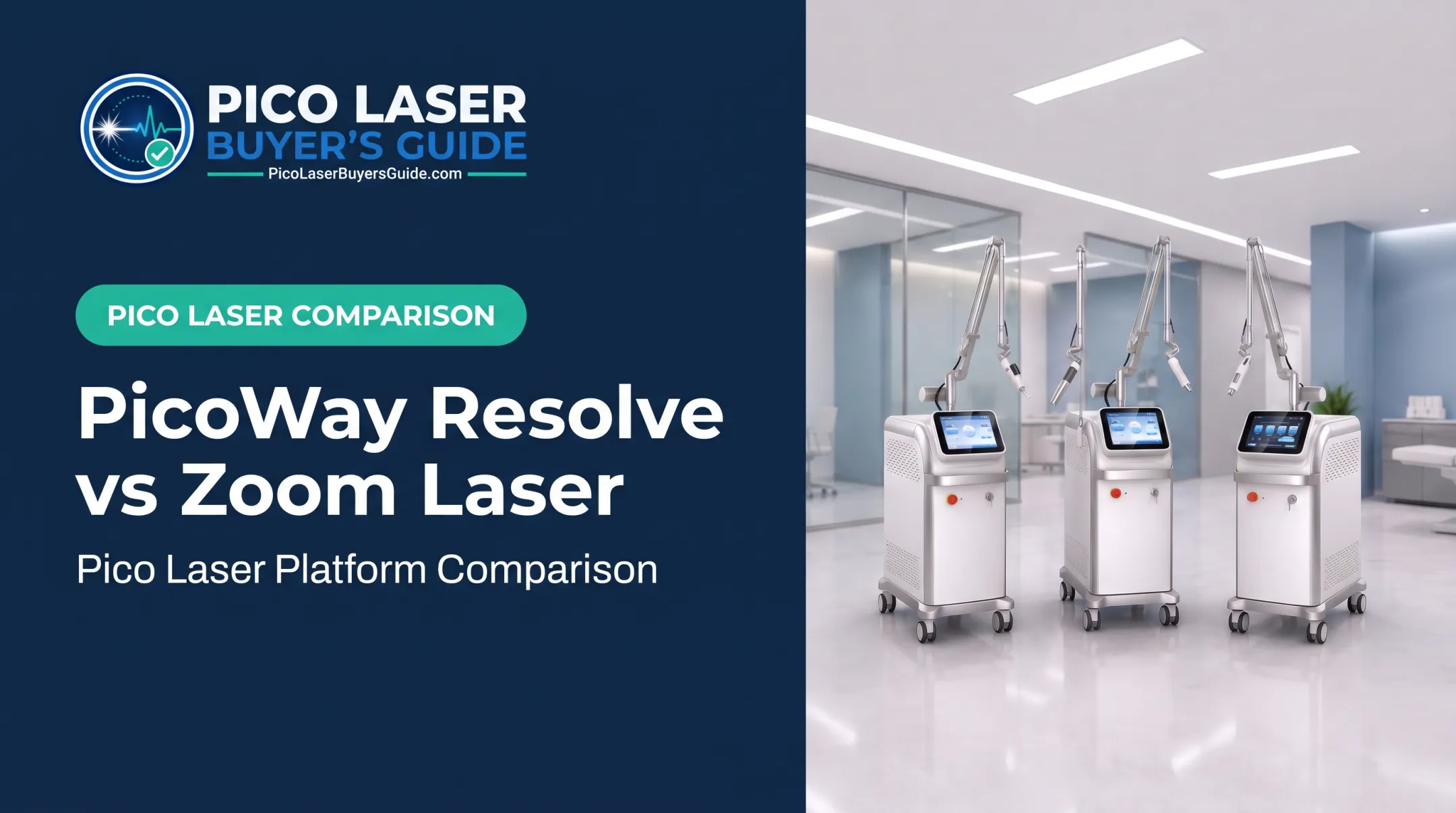
This guide is for medical professionals, med spa owners, tattoo removal clinics, dermatology and plastic surgery practices, and technical buyers comparing aesthetic laser systems in the US. It covers how PicoWay works, what it is cleared to treat, skin-of-color considerations, treatment and recovery expectations, competing platforms, FDA clearance checks, and procurement.
Key Takeaways
- PicoWay relies mainly on photoacoustic fragmentation, with a remaining thermal component.
- Wavelength, handpiece, indication, and skin type decide whether a configuration fits a goal.
- FDA clearance covers specific indications, not identical results or superiority.
- Judge training, service, warranty, and total ownership cost, not headline specs alone.
What Is PicoWay Laser? Technology, Platform, and Configuration
How PicoWay's picosecond technology works
Ultra-short pulses create a photoacoustic effect. Energy is delivered faster than heat can spread, so tattoo ink or pigment shatters into fine particles. Older nanosecond Q-switched systems rely more on heat.
Even with ultra-short pulses, a peer-reviewed secondary publication notes that a photothermal component remains. Outcomes still depend on parameters and operator technique.
The body clears fragmented pigment gradually.
Fractional modes take a different path. Research on PicoWay for acne scars describes focused beamlets that produce laser-induced optical breakdown, then remodeling. That mechanism applies to scars, wrinkles, and texture, not direct pigment removal.
The platform and its configurations
Candela's technical materials list four wavelengths and several handpieces:
| Output/handpiece | Pulse duration | Spot size | Delivery |
|---|---|---|---|
| Zoom 1064 nm | 450 ps | 2-10 mm | Full beam |
| Zoom 532 nm | 375 ps | 2-10 mm | Full beam |
| 730 nm | 250 ps | 2, 3, 4 mm | Full beam |
| 785 nm | 300 ps | 2, 3, 4 mm | Full beam |
| Resolve 1064/532 nm | 450/375 ps | 6 x 6 mm | Fractional microbeams |
Pulse figures vary between sources (Candela's eBook and other published sheets differ), so confirm the numbers for the exact applicator. Full-beam Zoom handpieces target pigment. Resolve and Resolve Fusion handpieces are fractional and aimed at wrinkles, acne scars, and texture.
Why specifications matter, and where they mislead
Wavelength affects which pigment colors absorb energy, how deep it reaches, and how much melanin competes for it. 532 nm is shallow and strongly melanin-absorbed. 1064 nm penetrates deepest with the least melanin absorption.
Compare pulse duration, peak power, fluence, repetition rate, spot size, cooling, and coverage as a set. No single number proves performance. Candela's materials list maximum peak powers of 0.89/0.53/0.4/0.3 GW at 1064/532/730/785 nm.
Confirm that specs apply to the exact model, handpiece, and software configuration quoted. Then check claims against peer-reviewed studies, FDA documents, and real-world evidence. A strong spec does not establish fewer sessions, faster healing, or better results across skin types.

What Can PicoWay Treat?
US-cleared indications and intended uses
PicoWay's initial 510(k), K142372, was decided on October 30, 2014, for 532/1064 nm tattoo removal. Later clearances added benign pigmented lesions (2015), 785 nm (2016), Resolve acne scars and wrinkles (2017), 730 nm and more handpieces (2019), and named pigment indications including melasma (2022).
Limits apply by wavelength and skin type, per FDA's K220853 letter:
| Indication | Wavelength/attachment | Fitzpatrick types |
|---|---|---|
| Red, yellow, orange tattoos | 532 nm | I-III |
| Green, blue tattoos | 730 or 785 nm | II-IV |
| Dark tattoos | 1064 nm | I-VI |
| Melasma, lentigines, café au lait macules | Wavelength-specific | I-IV |
| Nevus of Ota | 1064 nm | III-IV |
| Acne scars | Resolve 1064 nm | II-V |
| Wrinkles | Resolve handpieces | I-IV |
The I-VI range applies to 1064 nm tattoo labeling, not to every indication. A 510(k) means substantial equivalence, not PMA approval. Off-label use is a physician's judgment, not a validated indication, so don't treat every advertised use as equally supported.
Tattoo removal and multicolored ink
Black and dark inks respond to 1064 nm. Red, orange, and yellow need 532 nm. Blue and green respond better with 730 or 785 nm. In a small 785 nm study, mean clearance after four sessions was:
- Purple: 85%
- Blue: 81%
- Green: 74%
- Black: 61%
- Red: 11%
- Yellow: 5%
Those figures reflect study protocols, not promised timelines.
Ink composition, depth, density, age, layering, and immune response all affect results. Tattoo-focused buyers should weigh multi-wavelength capability, handpiece availability, throughput, and evidence for difficult colors.
Pigment, acne scars, and wrinkles
Benign pigmented lesions need medical assessment first. Suspicious or changing lesions should be evaluated before any cosmetic laser.
Melasma is driven by hormonal, inflammatory, and UV factors, so laser alone rarely covers it. A 20-patient fractional 1064 nm study showed mMASI falling from 10.8 to 2.7 at six weeks, then rising to 3.6 at 12 weeks.
For scars and wrinkles, a 27-patient acne scar study found 81% improved on blinded review. A 20-subject wrinkle study found 75% improved by at least one point. Both were small, and neither supports a fixed degree of collagen gain.

Who is an appropriate candidate
Providers should assess:
- Diagnosis and Fitzpatrick skin type
- Recent sun exposure or tanning
- Medications, prior procedures, and scarring history
- Active skin conditions and treatment goals
The American Academy of Dermatology also flags tattoo age, ink depth and colors, location, and raised-scar history. Candidacy, settings, and session count are individual decisions, not something to infer from device marketing.
PicoWay and Skin of Color
Why skin tone changes the risk
Higher epidermal melanin raises the risk of post-inflammatory hyperpigmentation (PIH), hypopigmentation, prolonged inflammation, and scarring. Picosecond technology may reduce heat compared with older approaches. It does not make every setting suitable for every Fitzpatrick type.
What the evidence shows
- A 2020 split-tattoo study in Asian patients (11 patients, 37 tattoos, types III-IV) reported PIH in 9/37 tattoos at 532 nm and 8/37 at 1064 nm.
- The same study found hypopigmentation in 9/37 tattoos at 532 nm and none at 1064 nm.
- The acne scar study included 11 of 27 completers with types IV-V, with no hyperpigmentation at follow-up, but only two type V completers and no type VI.
- The melasma study covered types III-IV only.
The evidence is small, short-term, and often manufacturer-funded. "Safe for all skin tones" is not a supportable claim.
Safeguards include:
- Conservative parameters and test spots where appropriate
- Cooling and adequate treatment intervals
- Careful diagnosis and documented follow-up
Settings belong to the supervising clinician.
Choosing a provider for higher-risk cases
Ask about:
- Experience with the relevant skin tones and indication
- Medical oversight and complication protocols
- Before-and-after documentation
- Willingness to explain risks and alternatives
What to Expect During Treatment, Healing, and Results
Before the appointment
Patients typically complete a consultation, medical history review, photography or assessment, and a sun-exposure discussion before treatment. Providers set pre-treatment instructions by indication.
Precautions listed in the PicoWay tattoo trial included:
- Pregnancy and breastfeeding
- Phototoxic medicines
- Active infection
- Keloid history
Those were trial exclusions, not a universal contraindication list.
During the procedure
The typical sequence is:
- Cleansing and eye protection
- Optional comfort measures
- Handpiece selection and laser delivery
- Cooling and aftercare instructions
Candela describes tattoo treatment as likely uncomfortable, wrinkle treatment as generally low-pain, and acne scar or dark spot treatment as mild to none. Sensations such as snapping, warmth, or tingling vary with area, settings, ink density, and tolerance.
Healing, aftercare, and results
Normal effects include redness, swelling, pinpoint bleeding, tingling, and purplish spots. The AAD also notes some blistering after tattoo removal. Contact the provider about worsening pain, signs of infection, or unexpected blistering.
Three timelines differ:
- Activity downtime: Candela says normal activities and makeup resume within a day for scars and wrinkles; tattoo bandaging may last a few days.
- Surface healing: Wound care continues until the skin has healed.
- Fading or remodeling: Ink clearance and collagen change take weeks to months.

Aftercare principles include:
- Gentle cleansing
- Avoiding friction and unapproved actives
- Following wound-care instructions
- Sun protection for 3 months after laser tattoo removal (per AAD guidance)
How to Evaluate PicoWay Against Other Pico Lasers and Buy It
Comparing PicoWay with PicoSure and other platforms
There is no universal best pico laser. Weigh each platform on:
- Wavelengths and handpieces
- Pulse delivery and peak power
- Indications and skin-tone labeling
- Evidence base
- Ergonomics and service
Technical maximums are not clinical rankings.
| Platform | Documented specs | FDA scope |
|---|---|---|
| PicoSure Pro | 755 nm; optional 532/1064 nm; 500-900 ps | 755 nm tattoos and pigment; Platinum Focus scars and wrinkles |
| enlighten III | 532/670/1064 nm; 660/750 ps | K182997; 1064 nm tattoos I-VI |
| Discovery Pico Plus | 532/1064 nm; 370/450 ps; up to 1.8 GW | K240983; 1064 nm tattoos I-VI |
| PiQo4 | 2018 brochure: 600/800 ps options | K151473; dated documentation |
Verify competitors' specs from current manufacturer documents. One 2023 randomized melasma trial compared a 1064 nm picosecond Nd:YAG with 755 nm PicoSure (35.9% vs 25.5% MASI improvement), but it did not name the Nd:YAG brand. Don't cite it as a PicoWay-versus-PicoSure result.
Matching the platform to the practice
- First pico for an independent med spa: Prioritize the indications you'll actually sell, plus training and service.
- High-volume tattoo clinic: Weigh multi-wavelength coverage, throughput, and color evidence.
- Dermatology or plastic surgery: Fractional handpieces and pigment indications may matter more.
- Expanding practice: Confirm the handpieces fit your skin-tone range.
Estimate treatment mix, skin-tone range, area sizes, appointment volume, provider expertise, and room requirements. Candela lists PicoWay at 125 kg, with 200-240 VAC dedicated service required. Versatility only pays off if you'll use and support those handpieces.
New versus pre-owned equipment
Pre-owned due diligence:
- Exact model and serial number
- Ownership history
- Service and calibration records
- Handpiece condition and shot counts
- Software status and parts availability
- Installation needs, warranty, and training
FDA distinguishes servicing from remanufacturing; remanufacturers carry registration and reporting duties. A lower price can be erased by repairs, downtime, replacement handpieces, shipping, compliance work, and limited manufacturer support.
Technical, regulatory, and vendor diligence
Request these items before you buy:
- Operator manual and specifications
- FDA clearance documents and clinical references
- Warranty terms and service commitments
- Installation requirements, training details, and safety documentation
Check that quoted capabilities aren't blended from different models or handpieces. Candela advertises a one-year warranty on new purchases, but confirm parts, labor, travel, and handpiece coverage in writing.
Estimates place new systems at $250,000-$325,000. Pico Laser Buyer's Guide's illustrative five-year ownership estimate is $262,000. Build your own total from acquisition, financing, maintenance, staffing, insurance, compliance, consumables, and downtime.

A practical decision process
- Define the clinical need.
- Verify the indication in FDA records.
- Compare complete configurations.
- Assess provider training.
- Inspect new or pre-owned equipment.
- Validate service support.
- Document the purchase rationale.
The Pico Laser Buyer's Guide offers independent comparative research and a manufacturer-backed source library for evaluating PicoWay alongside other pico platforms.
Frequently Asked Questions
How long does PicoWay take to heal?
There is no universal duration. Candela reports that normal activities can resume within a day for scars and wrinkles; tattoo sites may need bandaging for a few days. Pigment clearance and remodeling take weeks to months and vary by indication, settings, and skin type.
Does PicoWay laser actually work?
Indication-specific studies report improvement, but results are not guaranteed. Outcomes vary with pigment type, configuration, technique, and patient factors. Improvement is not the same as complete tattoo clearance or permanent melasma remission.
Is PicoWay laser worth it?
For patients, it depends on goals, expected sessions, downtime, alternatives, provider skill, and cost. For practices, it depends on utilization, treatment mix, and total ownership cost.
What is the PicoWay laser good for?
Cleared uses include tattoos, benign pigmented lesions, melasma, lentigines, café au lait macules, nevus of Ota, acne scars, and wrinkles. Each indication has wavelength and skin-type limits and its own supporting evidence.
Which pico lasers are FDA-approved?
Pico lasers are FDA-cleared through 510(k), not approved, for specific indications. Examples include PicoWay, PicoSure Workstation, enlighten III, Discovery Pico, and PiQo4. Check current records in FDA's 510(k) database.