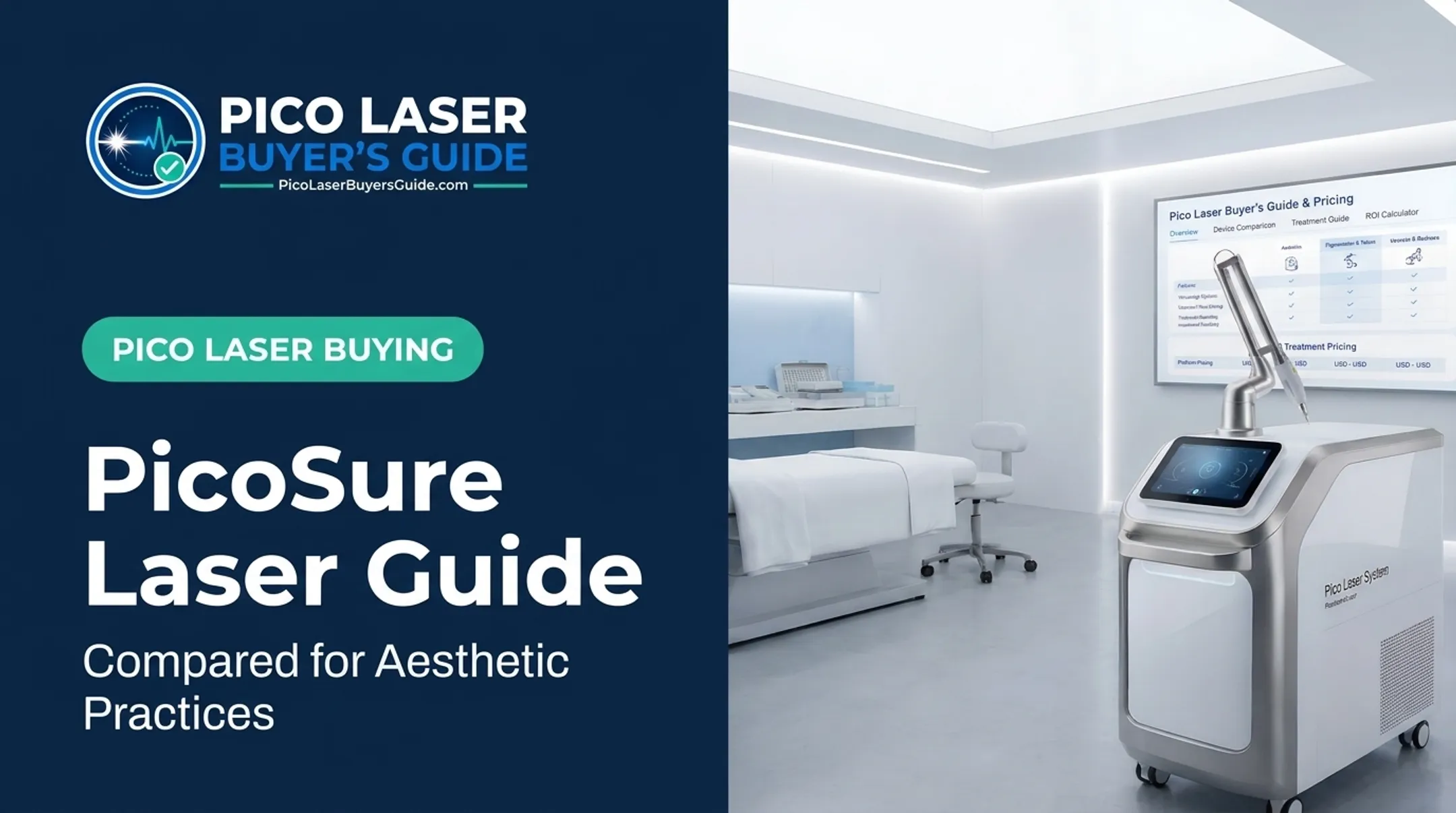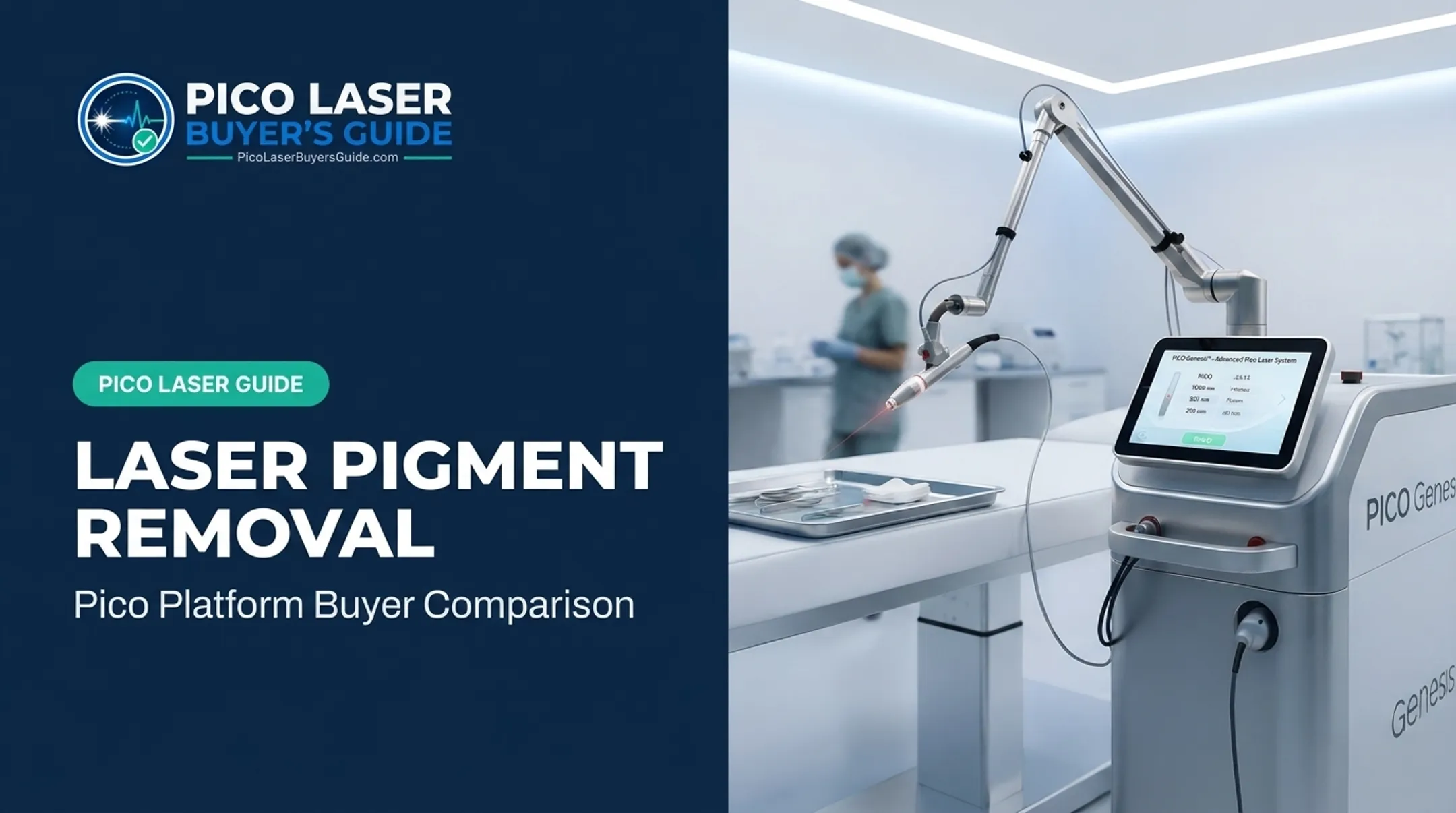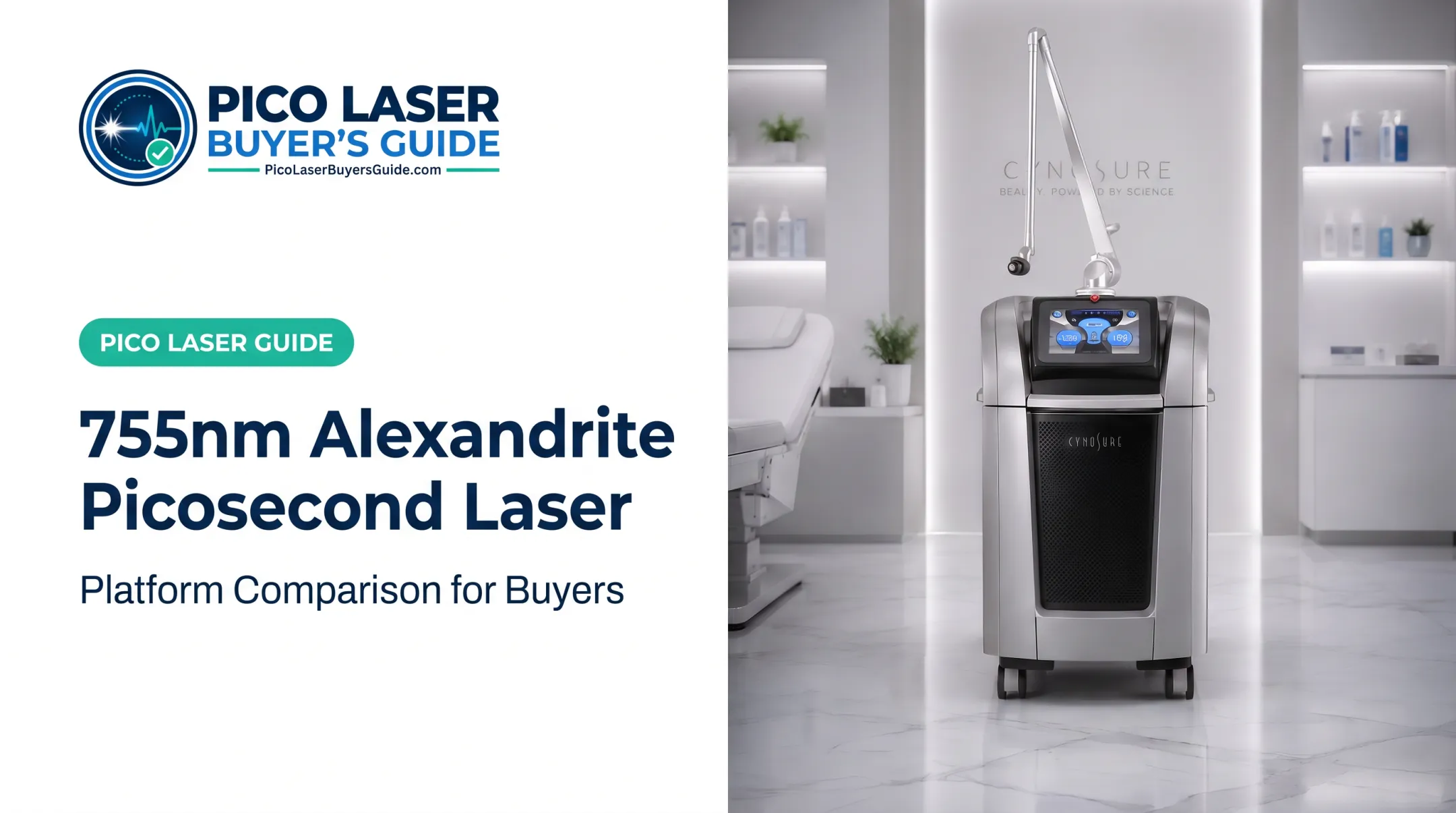

The split runs between systems that create controlled thermal or fractional injury and picosecond platforms whose collagen-related effects depend on wavelength, pulse duration, handpiece, and protocol. This guide covers the biology, the major laser categories, realistic clinical applications, safety, and the technical factors to compare before you buy.
Key Takeaways
- Collagen remodeling builds over weeks to months, not at the first session.
- Wavelength, pulse duration, energy, depth, and delivery pattern all shape the response.
- Picosecond does not automatically mean collagen-focused. Ask for device-specific evidence.
- Verify FDA clearance, documentation, training, and service support before purchase.
How Lasers Stimulate Collagen
From laser energy to remodeling
Type I collagen dominates the dermis and gives skin its strength and resilience. When collagen fragments, fibroblasts lose mechanical tension, synthesize less matrix, and break down more of it. That contributes to wrinkles, scars, and uneven texture.
Lasers work through selective photothermolysis. A chromophore (water, melanin, or hemoglobin) absorbs the energy, and fluence and pulse duration relative to thermal relaxation time determine how tightly the injury stays localized. Fractional delivery leaves untreated tissue between microscopic injury columns, which supports repair.
Picosecond fractional systems work differently. Laser-induced optical breakdown (LIOB) creates tiny plasma and cavitation sites that cause mostly photomechanical injury, with less surrounding heat. Manufacturer-backed histology at day 30 shows a denser Type I and III collagen matrix.
Immediate tightening versus neocollagenesis
Swelling and heat-related contraction can make skin look firmer right away. New collagen takes longer. A small human histology case with two participants showed collagen and elastin increases in biopsies at two months. That is small, uncontrolled evidence, so don't treat it as a universal timeline.
Why parameters matter
Settings change depth, comfort, downtime, and risk:
- Wavelength: governs absorption, scattering, and penetration, though it isn't a fixed depth rating
- Pulse duration: heat confinement versus spread
- Spot size: larger spots can penetrate deeper
- Fractional energy and density: more energy deepens the columns, and higher density raises pain, edema, and PIH
- Cooling: protects the epidermis and limits bulk heating
Similar scar remodeling with fewer adverse effects has been reported at lower density. More is not automatically better. A qualified provider should set parameters for the device, indication, and skin, and never copy them across platforms.
Laser Categories and Where Picosecond Lasers Fit
Ablative, non-ablative, and fractional
| Category | Effect | Recovery |
|---|---|---|
| Ablative (CO2 10,600 nm, Er:YAG 2,940 nm) | Water-targeted tissue removal plus dermal heating | New skin coverage in 7-10 days; full recovery takes at least a month, per Mayo Clinic |
| Non-ablative (1540/1550/1927 nm, selected Nd:YAG) | Heats dermis, preserves more surface | Shorter recovery, more gradual results |
| Fractional | Microscopic zones surrounded by untreated skin | Depends on energy and density |
| Fractional picosecond | Laser-induced optical breakdown (LIOB) cavitation, mostly photomechanical | Less thermal injury, though pinpoint bleeding can occur |
Fractional is a delivery pattern, not a category of its own. It applies to both ablative and non-ablative systems, and it balances stimulation against healing time.
Depth also varies within a single wavelength. In vivo imaging of a 1927 nm laser showed effects spanning non-ablative to ablative depending on energy and tip. Maximum mean ablation depths reached 101 and 115 micrometers for the two tips studied.
Positioning picosecond accurately
"Picosecond" describes pulse duration. It does not promise one uniform collagen outcome. Results depend on wavelength, fractional or diffractive handpiece, energy delivery, indication, and published evidence for that exact configuration.
Keep four things separate when reading vendor material:
- Manufacturer claims
- FDA-cleared indications
- Peer-reviewed evidence
- Off-label clinical use
Clearance shows substantial equivalence. It does not show superiority. Off-label use is legal for licensed practitioners, but it must not be marketed as a cleared indication.
Those distinctions shape how you compare systems:
- Resurfacing-focused platforms generally offer stronger tightening potential with more downtime
- Multi-purpose picosecond systems offer tattoo, pigment, and fractional versatility with shorter recovery
- Fractional indications on multi-purpose systems depend on the specific handpiece
Weigh platform choice against patient demand, staff training, and supporting evidence.
Clinical Applications and Expected Results
Matching goals to treatments
Fine lines, wrinkles, acne scars, rough texture, and enlarged pores are the usual targets. The strength of evidence varies by laser and condition. Trials of picosecond fractional devices show:
- A 755 nm diffractive-lens study of 40 women: Fitzpatrick wrinkle scores fell from 5.48 to 3.47 at six months, with 90% satisfied
- A fractional 1064 nm study of 22 subjects: elasticity rose 10.96% and firmness 9.04%, which are not percentage collagen gains
- A 2026 split-face trial of 35 completers: picosecond versus 1927 nm thulium showed no significant difference on ECCA scar scoring, with less pain on the picosecond side

A seven-study meta-analysis found no significant efficacy difference versus other fractional lasers for atrophic acne scars. Picosecond showed lower PIH (RR 0.16) but more temporary pinpoint bleeding.
Remodeling does not recreate lost volume or fix significant excess skin. Fillers, biostimulators, or surgery address those problems. Mayo notes resurfacing cannot fix sagging skin.
Pigment and vascular results are separate
Improved color doesn't prove collagen stimulation. Some lasers target melanin or hemoglobin, not the dermal matrix. Melasma, post-inflammatory hyperpigmentation, and undiagnosed lesions need careful medical assessment first.
AAD guidance supports diagnosis- and skin-tone-specific selection and possible biopsy for mimics. A melasma indication is not a cure.
Setting realistic expectations
Expect gradual, cumulative improvement from fractional picosecond work, not dramatic resurfacing. Session count, intervals, and maintenance depend on the platform and goal, and no uniform maintenance interval is established.
Look past before-and-after photos. Studies use different measures: wrinkle scores, ECCA, GAIS, blinded photo review, 3D profilometry, elasticity readings, and satisfaction. FDA summaries can mislead too. One reported that 94% of treated areas showed photographic improvement, which is not 94% scar reduction.
Candidate Selection, Safety, and Aftercare
Patient and skin factors
Professional review should cover:
- Skin tone and history of hyperpigmentation
- Keloid or scarring tendency
- Active infection, herpes history, or inflammation
- Recent tanning and acne status
- Healing ability and medical history
- Treatment goals
Darker skin calls for careful wavelength selection, conservative settings, spacing, cooling, and experienced oversight. A scoping review of 103 studies and 959 test spots supports using test spots to assess response, though it doesn't offer a universal protocol. No wavelength eliminates PIH risk, and no skin type is automatically suitable for every platform.
Medications and pre-treatment
Patients should disclose everything: prescriptions, over-the-counter medicines, supplements, and topicals. The clinician then assesses photosensitivity, bleeding, inflammation, and healing risk. Patients should never stop prescribed medication on their own.
- Isotretinoin: ASDS found insufficient evidence to delay non-ablative lasers, but fully ablative lasers during systemic use are not recommended
- Photosensitizers: a review of four publications found no reported laser complications, which is limited evidence, not proof of safety
- Infection: in a 2025 CO2 consensus, 95% of panelists called active facial infection a contraindication
Pre-treatment planning should also cover:
- Sun avoidance and informed consent
- Baseline photos
- Eye protection, cooling, and emergency protocols
Irritating topicals should stop only when the clinician directs it.
Recovery and aftercare
Expect redness, warmth, swelling, sensitivity, dryness, or peeling, scaled to treatment intensity. Manufacturer material lists fractional picosecond downtime at 6-24 hours versus 5-10 days for fractional ablative CO2. Treat that as manufacturer data, not a universal rule.

Aftercare basics include gentle cleansing, moisturizer, sun protection, and no unapproved actives.
Patients should contact the provider for:
- New blisters or sores
- Fever or chills
- Pus-like drainage
- Increasing pain, redness, or swelling
Use device-specific recovery instructions from the manufacturer.
How Clinics Should Evaluate a Collagen-Stimulating Laser Platform
Compare technical specifications
Line up platforms on the specs that shape collagen outcomes:
- Wavelength options and pulse duration
- Fluence range, spot sizes, and repetition rate
- Beam profile, fractional or scanning modes
- Handpieces, cooling, and stated indications
For example, one published PicoTech specification lists 1064, 532, 755, 585, and 650 nm, roughly 350 ps, 2-10 mm spots, and 1-10 Hz.

Higher power doesn't guarantee better outcomes. Ask whether the platform supports your target indications with usable protocols and safety controls.
Verify evidence and regulatory status
Review study populations, parameters, follow-up, adverse events, and whether the data apply to the exact device and handpiece.
Check the current FDA 510(k) clearance for the exact model, wavelength, handpiece, mode, and indication. Cleared indications differ even within a brand. One PicoWay Resolve clearance, for example, lists acne scars for Fitzpatrick II-V and wrinkles for I-IV.
Keep three levels apart: technically possible, FDA-cleared, and clinically validated. The strongest purchase case has all three.
Assess operational fit and ownership
Total ownership includes purchase price, installation, training, maintenance, service, and downtime. Ask about:
- Onboarding, staff training, and credentialing (operator rules vary by state)
- Warranty terms, repair response, and parts
- Software updates and room requirements
- Workflow complexity versus patient demand and your capital budget
Independent cross-vendor reliability and repair-cost benchmarks are hard to find, so get service terms in writing before you buy.
Questions for every vendor
- What evidence supports collagen stimulation for this exact handpiece?
- What are the recommended settings by indication?
- Which skin types are cleared, and what are the contraindications?
- Which indications are cleared and which are off-label?
- What does training include, and how is service covered?
- Can I see complete technical specifications and documentation?
Be skeptical of phrases like "collagen boosting," "deep rejuvenation," or "zero downtime." The FTC expects health claims to be substantiated, generally with human testing appropriate to the claim.
Independent research
The Pico Laser Buyer's Guide compares picosecond platforms using manufacturer-backed sources, technical specifications, and transparent sourcing. Use it as one input to due diligence, and confirm clinical, regulatory, and commercial details directly with the manufacturer and qualified advisors.
Frequently Asked Questions
Does collagen stimulation work?
Laser-induced remodeling can improve selected concerns in appropriate patients. Outcomes depend on laser type, parameters, treatment plan, evidence quality, and individual healing.
Does laser hair removal stimulate collagen?
Hair removal targets melanin in follicles. It shouldn't be marketed as collagen stimulation, and any secondary skin effect depends on the device and protocol.
What medications should I avoid taking with laser hair removal?
Disclose every prescription, over-the-counter medicine, supplement, and topical to your clinician, who can assess photosensitivity, bleeding, and healing risks. Don't stop anything on your own.
Can laser fix skin discoloration?
Some lasers improve selected pigment or vascular concerns. The right choice depends on diagnosis, skin tone, and cause, and a qualified professional should evaluate first.
What type of laser stimulates collagen the most?
No universal ranking exists. Ablative, non-ablative, fractional, and picosecond systems produce different responses, and pooled evidence doesn't show picosecond scar superiority.
How long does collagen stimulation from laser treatment last?
Results are gradual and variable. One wrinkle trial followed patients for six months, and a scar trial for 12 weeks. Longevity depends on age, sun exposure, skincare, and any maintenance plan.