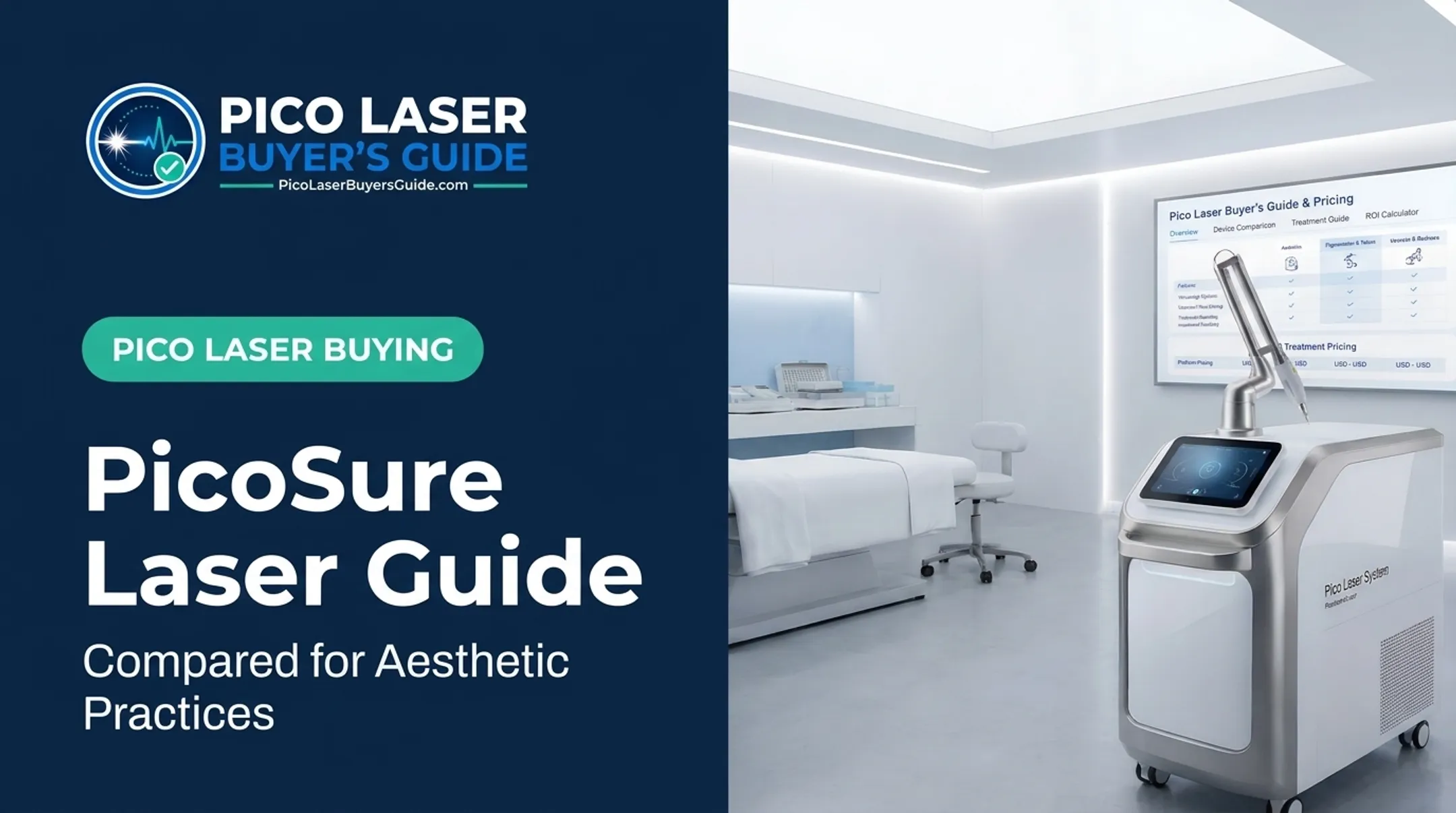
This guide is for US med spas, tattoo removal clinics, dermatology and plastic surgery practices, and other clinical operators weighing a new or pre-owned system. It covers classification, clinical applications, specifications, competitor comparisons, regulatory checks, ownership costs, and due diligence.
Key Takeaways
- PicoSure Pro is one branded platform; "pico laser" is a category spanning many manufacturers.
- Wavelength, lens, settings, operator skill, and diagnosis all shape real-world value.
- Verify the exact configuration, FDA-cleared indications, service history, warranty, and training in writing.
- Judge total cost of ownership and expected utilization, not sticker price.
What Is PicoSure Pro?
How the platform is classified
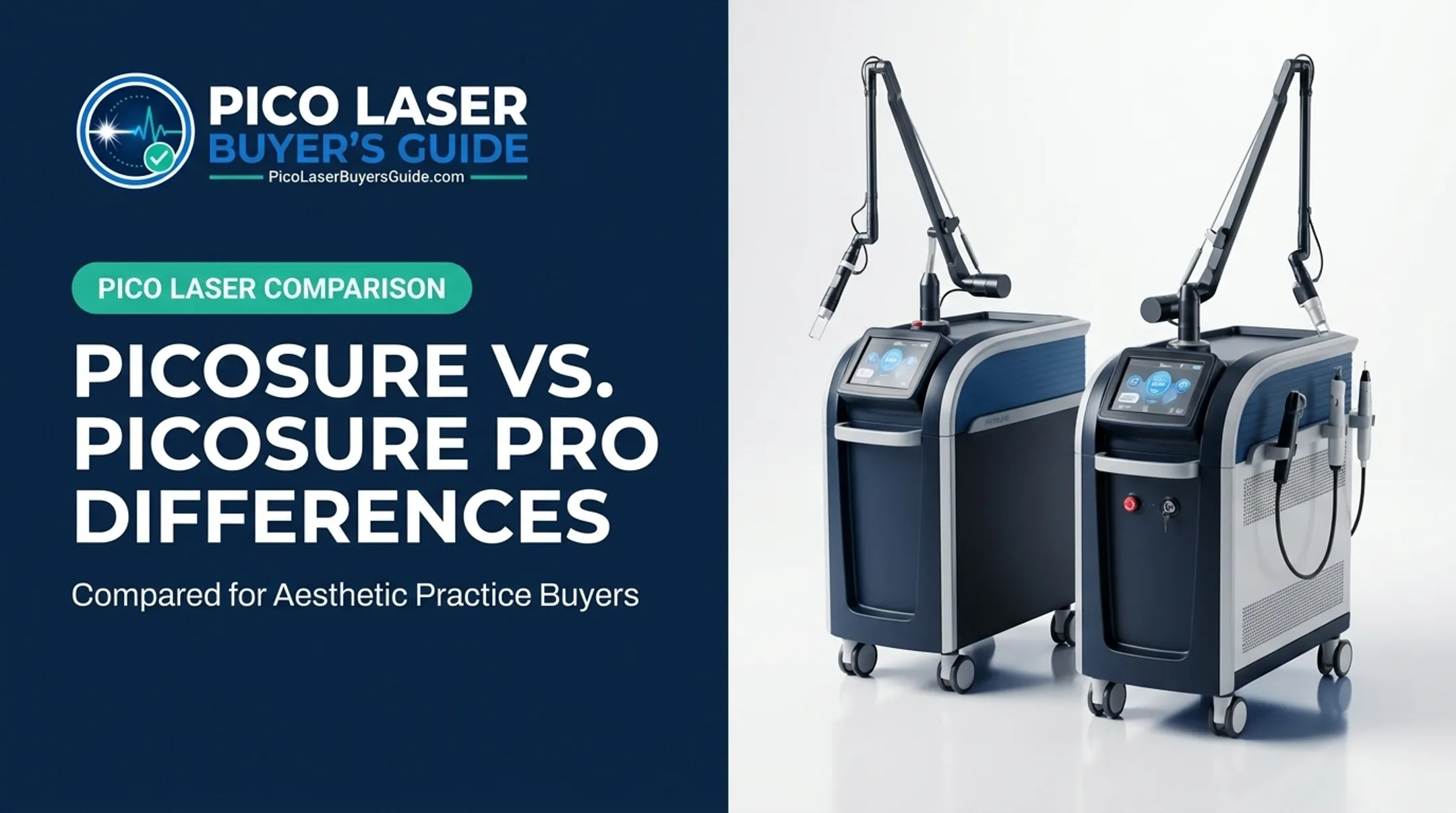
PicoSure Pro is a picosecond Alexandrite laser from Cynosure Lutronic. Cynosure, LLC is the FDA applicant, so you will see both names in paperwork. The manufacturer launched it in 2022 as an upgrade to the original PicoSure.
A picosecond is one trillionth of a second. Pro's published pulse duration is 500-900 ps, so it is a pulse-duration category, not a literal single picosecond.
FDA classifies the device as Class II under 21 CFR 878.4810 (laser surgical instrument). That is a regulatory category, not a laser-radiation hazard class.
What it is designed to do
Short pulses target pigment particles and tattoo ink, with a stronger photomechanical than photothermal effect. Fractional optics address selected skin-texture concerns. Each use depends on the handpiece, wavelength, settings, and clinical indication.
Skip any "no heat" or "zero pigmentation risk" claims. Both photomechanical and photothermal effects occur, and dyspigmentation is documented in published trials.
PicoSure Pro versus generic pico terminology
Not every pico laser is interchangeable. Compare these before trusting the label:
- Manufacturer and laser medium
- Wavelength configuration
- Cleared indications for that exact configuration
- Accessories and lenses
- Service network and warranty
- Published evidence
Clinical Applications and Limitations
Common treatment categories
Cleared uses depend on configuration:
| Configuration | Documented use |
|---|---|
| 755 nm | Tattoos and benign pigmented lesions, including nevus of Ota, Hori macules, and melasma |
| Platinum Focus lens | Acne scars and wrinkles, skin types I-IV |
| Optional 532 nm | Tattoos, skin types I-III per the Pro webpage |
| Optional 1064 nm | Tattoos and benign pigmented lesions |
Broad pigment labeling does not extend to fractional scar and wrinkle work in every skin type. Confirm each row against current manufacturer documents and the instructions for use.
Published evidence is also limited. An older 755 nm tattoo trial found more than 75% clearance in all completers after a mean of 4.25 sessions, but it was small, uncontrolled, and not Pro-specific.
A 2015 acne-scar study reported roughly 24-27% mean scar-volume improvement after six treatments. Neither is a Pro trial.

Matching the machine to your patient mix
- Tattoo-focused clinics: need optional 532 nm and 1064 nm for multicolor ink, plus high appointment throughput.
- Pigment-focused med spas: lean on the 755 nm core and zoom handpieces, with a clear melasma protocol.
- Dermatology and plastic surgery practices: value the Platinum Focus lens for scars and texture, and have the diagnostic skill to screen lesions.
Limitations and clinical risks
Several situations call for careful assessment or a changed plan:
- Melasma, where recurrence and post-inflammatory hyperpigmentation (PIH) occurred even in the PicoSure arm of a 2023 randomized trial
- Active inflammation or infection
- Recent tanning and prior PIH
- Darker skin types
- Photosensitizing medications
- Suspicious lesions, which need diagnosis before cosmetic treatment
Australian regulator guidance (ARPANSA) flags medications and supplements as safety concerns, but it is cross-device advice, not a US Pro contraindication list. No one can guarantee clearance or identical results across patients.
Technical Specifications That Matter When Comparing PicoSure Pro Machines
Figures below come from the manufacturer's 2022 international brochure. Regional and generation differences are material, so request the spec sheet for the exact unit.
| Parameter | Published value |
|---|---|
| Wavelengths | 755 nm core; 532/1064 nm optional |
| Pulse width | 500-900 ps |
| Pulse energy | 300 mJ ±20% |
| Maximum fluence | 6.37 J/cm² |
| Handpieces | Zoom 2-6 mm; fixed 5, 6, 8, 10 mm |
| Lenses | Flat (pigment); Platinum Focus (revitalization) |
| Repetition rate | Single shot to 10 Hz (FDA workstation record) |
Wavelengths, handpieces, and lenses
A used unit may lack the optional wavelengths or the Platinum Focus lens. Ask for a written list of installed components and match each to the services you plan to sell.
Pulse and energy controls
Energy and repetition rate affect throughput and flexibility. Theoretical fluence figures are not selectable clinical settings, so confirm real operating combinations in the operator manual.
Workflow and usability
The platform uses a touchscreen console and articulated arm. Brochure material says little about presets, cooling, or calibration, so test these in a demonstration. Confirm eye-protection requirements for your room.
Facility requirements
- 200-240 V, 4.5 kVA, 50/60 Hz, single phase
- Dedicated 30 A outlet
- 43 x 22 x 42 in; 375 lb
The brochure gives no room-size, HVAC, or electricity-cost data. Have an electrician review the site before delivery.
Training and serviceability
Cynosure lists a 24-48-hour technical response for warranty and contract customers, plus a 24/7 call center. That is response time, not repair completion or guaranteed uptime. Ask about US authorized service near you, used-unit eligibility, calibration, and handpiece replacement.
PicoSure Pro Compared With Other Laser Technologies
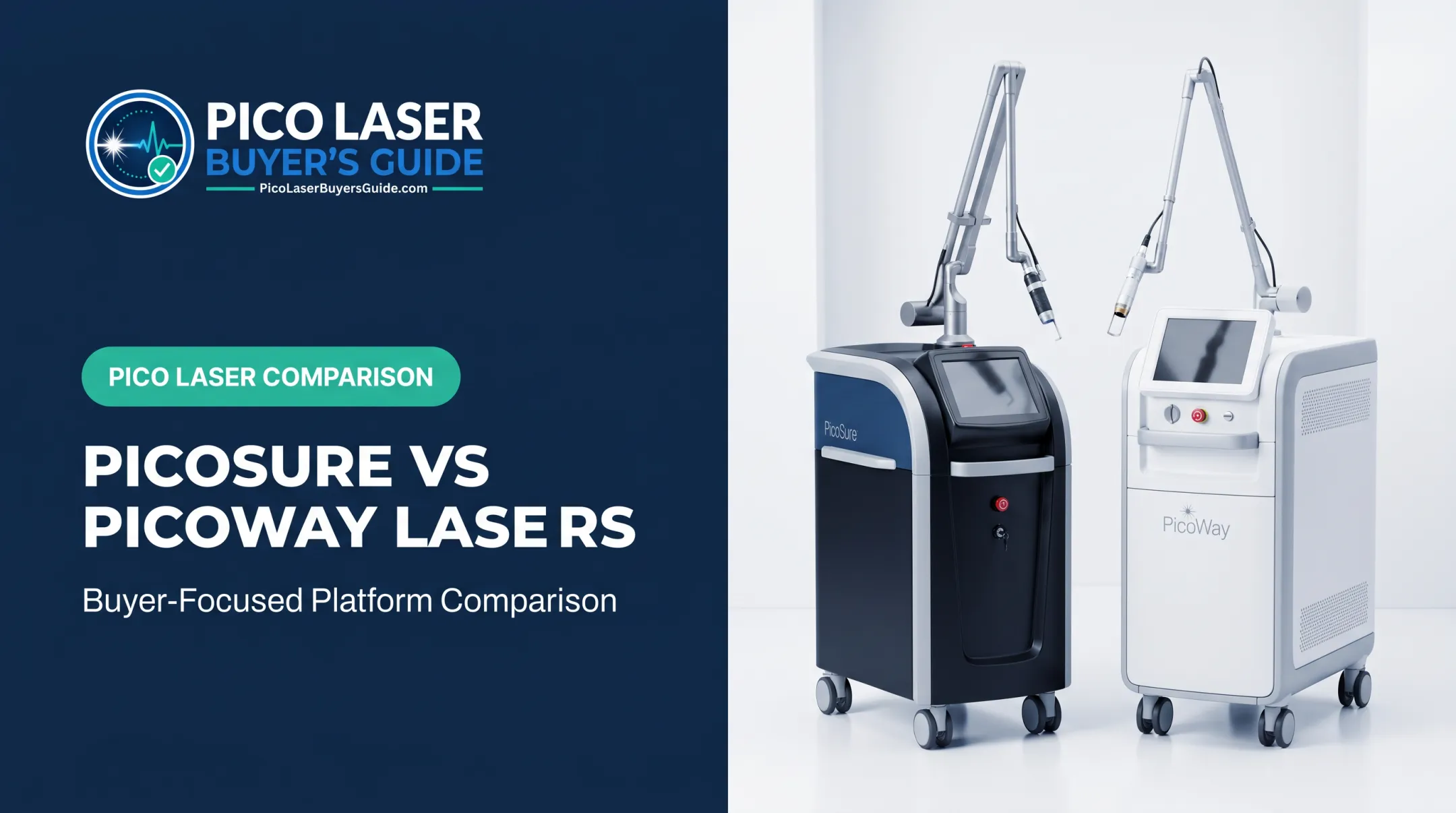
PicoSure Pro versus PicoWay
| PicoSure Pro | Candela PicoWay | |
|---|---|---|
| Wavelengths | 755 nm; optional 532/1064 | 532, 730, 785, 1064 nm |
| Pulse width | 500-900 ps | 240-500 ps (FDA 2022 description) |
| Fractional | Platinum Focus | Resolve (not a Pro accessory) |
| Melasma | In 755 nm indication | Also cleared |
Pro's webpage implies exclusive melasma clearance, but PicoWay's FDA record includes melasma too. Neither is universally superior. Budget estimates typically run $225,000-$300,000 for a new PicoSure Pro and $250,000-$325,000 for a well-configured PicoWay. Get written quotes for both.

Versus CO2 resurfacing
CO2 is ablative. ASDS lists wrinkles and scars as uses, with healing of 3-10 days depending on depth. Risks include infection, scarring, and pigment change. Choose CO2 for intensive resurfacing and Pro for pigment, tattoo, and selected texture work when lower downtime matters.
Versus IPL
IPL emits broad-spectrum light, not a specific laser wavelength. It suits nonablative rejuvenation, while Pro targets pigment and tattoos with defined wavelengths. Compare skin-type suitability, training, and risk management.
Versus Fraxel and fractional lasers
Fractional systems treat microscopic columns and can be ablative or nonablative. Indications vary by wavelength. "Fractional" is not one wavelength or a synonym for CO2. Compare depth, recovery, and number of appointments against your desired service mix.
How to choose
Rank these factors for your practice:
- Primary indications and skin types served
- Tattoo color demand
- Expected utilization and room capacity
- Downtime tolerance and clinician expertise
- Regulatory documentation and total ownership cost
There is no single best laser. The right platform depends on the clinical problem and your operating model.
Procurement, Pricing, and Total Cost of Ownership
Define your buying case first
Document your revenue-driving services, treatment volume, staffing, room, budget, financing preference, and whether the machine adds to or replaces a platform.
Match priorities to your practice type:
- First-time med spas: weigh training and seller advice heavily
- Tattoo clinics: prioritize wavelengths
- Dermatology practices upgrading: check compatibility with existing workflows
New versus pre-owned
For a used unit, request:
- Model year and serial number
- Shot count, where available
- Service, repair, and calibration records
- Refurbishment details
- Warranty transferability and software status
- Included handpieces and part availability
Get a demonstration or independent technical inspection when feasible. FDA distinguishes servicing that restores OEM specifications from remanufacturing that changes performance or intended use. Remanufacturing carries regulatory obligations.
Price versus total cost of ownership
Manufacturer sources publish no list price for the Pro. Planning estimates for new units run $225,000-$300,000, with optional wavelengths priced separately. Pre-owned pricing varies and is rarely public. Get written quotes.
Budget for:
- Installation, shipping, taxes, and financing
- Maintenance contracts, repairs, and handpieces
- Training, insurance, and room modifications
- Downtime and compliance
Cynosure's US warranty is the shorter of 12 months from installation or 15 months from receipt. Utilization decides how fast the cost is recovered, and an idle machine produces a very different outcome.
Regulatory and seller verification
- FDA clearance K210226 names the "PicoSure Workstation," not "PicoSure Pro," so map your unit's configuration to FDA records and manufacturer labeling.
- FDA registration is not approval, and FDA issues no registration certificates.
- State rules differ: California limits laser use to physicians or supervised RNs and PAs; Texas treats prescription-device procedures as medicine with physician delegation.
- Verify the seller's identity, references, return terms, warranty, title, and post-sale service obligations.
Using an independent research resource
The Pico Laser Buyer's Guide is an independent starting point for comparing PicoSure Pro with other platforms, reviewing manufacturer-backed specifications, and checking FDA 510(k) documentation. It supports procurement research but does not replace clinical assessment, legal review, equipment inspection, or qualified regulatory and technical advice.
Frequently Asked Questions
How much does a PicoSure Pro treatment cost?
Patient pricing differs from machine pricing. ASPS reports an average of $697 for laser skin treatments such as tattoo removal, but that is a category figure. Cost varies by indication, area, provider, location, and session plan.
How many PicoSure Pro sessions are typically needed?
There is no single session count for PicoSure Pro. Needs depend on the goal (pigmentation, tattoos, scars, or rejuvenation) and on provider assessment.
What is PicoSure Pro used for and how effective is it?
It is used for tattoos, benign pigmented lesions, and, with Platinum Focus, acne scars and wrinkles. Results vary by diagnosis, lens, skin type, settings, operator skill, and aftercare.
How does PicoSure Pro compare to CO2, IPL, Fraxel, and PicoWay?
They differ in mechanism, depth, downtime, and cleared uses. PicoWay is the closest rival; CO2 is ablative, IPL is broad-spectrum, and Fraxel is fractional. Match the platform to your primary indications, downtime tolerance, and practice economics.
What are the side effects and risks?
Expect redness, swelling, and sometimes blistering or scabbing. Temporary darkening, dyspigmentation, PIH, and inadequate results are possible. Proper assessment and settings reduce risk but do not eliminate it.
What type of laser is PicoSure Pro?
It is a branded Alexandrite picosecond laser. "Picosecond" describes pulse duration, so verify wavelengths, handpieces, and cleared uses for your specific configuration.