
Introduction
PicoSure is a branded picosecond laser platform from Cynosure, used for selected tattoo, pigment, and skin-rejuvenation applications. This article treats it as a clinic procurement decision, not a patient treatment pitch.
The risk for buyers is paying for a "picosecond" label without checking what the exact configuration is cleared to do. Specifications, wavelengths, and clearances differ by model, optic, and skin type.
We cover what PicoSure can treat, how it compares with PicoSure Pro and competing platforms, which specifications matter, and how to evaluate price, support, and regulatory status.
Key Takeaways
- PicoSure's value depends on matching wavelengths and handpieces to your planned treatments.
- Compare PicoSure and PicoSure Pro using written specs, current FDA documents, and installed configuration.
- Purchase price is one piece; service, training, installation, and downtime all count.
- Verify manufacturer documents and independent evidence before buying new or used.
What Are the Benefits and Capabilities of PicoSure Laser Machines?
How picosecond pulses work
Picosecond pulses are measured in trillionths of a second. Rapid energy absorption can create photomechanical or photoacoustic stress that fragments targeted pigment. Fractional optics can also trigger laser-induced optical breakdown and remodeling.
That doesn't make the treatment heat-free. A computational study found photothermal effects remain, so "pressure instead of heat" overstates the case.
Treatment categories and clearances
PicoSure's FDA history runs from K121346 (2012, tattoos and benign pigmented lesions) to K210226 (2021), which covers 755 nm tattoos and pigment, including Ota, Hori, and melasma. It also covers scars and wrinkles in skin types I-IV with specified optics, plus optional 532/1064 nm indications.
The main categories to evaluate:
- Tattoo removal
- Benign pigmented lesions and pigmentation
- Acne-scar and texture protocols (fractional optic)
- Wrinkles and skin rejuvenation
Pro labeling is published separately by Cynosure: pigment with the flat lens covers skin types I-VI, while Platinum Focus for scars and wrinkles covers I-IV. FDA documents use the name "PicoSure Workstation." Confirm the cleared indications for your exact configuration and labeling.
Wavelength matters
PicoSure centers on 755 nm. Optional 532 nm and 1064 nm delivery systems broaden coverage of tattoo colors and skin types. 755 nm is generally associated with blue, green, and certain dark pigments; 532 nm with red, orange, and yellow; 1064 nm with black and brown. Check which delivery systems are actually installed.
Evidence snapshot
- Tattoos: In an early trial of 12 completers, all exceeded 75% clearance, nine after 2-4 treatments. The mean was 4.25 sessions, up to ten. It was uncontrolled.
- Acne scars: A small study of 17 completers reported 24.3% mean scar-volume improvement after six treatments.
- Wrinkles: In 40 women, mean wrinkle score fell from 5.48 to 3.47 at six months. The abstract doesn't name the platform.

Operational benefits
For a clinic, the draw is versatility: one platform serving tattoo, pigment, and scar/rejuvenation menus. Erythema and edema in the scar and wrinkle studies lasted hours to two days. Downtime varies by operator and settings. Ask the manufacturer or distributor for protocol-specific downtime expectations.
Limitations and risks
- In the tattoo trial, hypopigmentation occurred in 20% and hyperpigmentation in 13%. These are study-specific rates.
- ASLMS lists blistering, crusting, and scarring as risks.
- A review in skin types IV-VI (56 patients) reported transient erythema and hyperpigmentation, but that doesn't expand the FDA indication.
- Response varies with ink, pigment depth, skin type, settings, sun exposure, melasma history, and operator skill.
How Does PicoSure Compare With PicoSure Pro?
Relationship and specifications
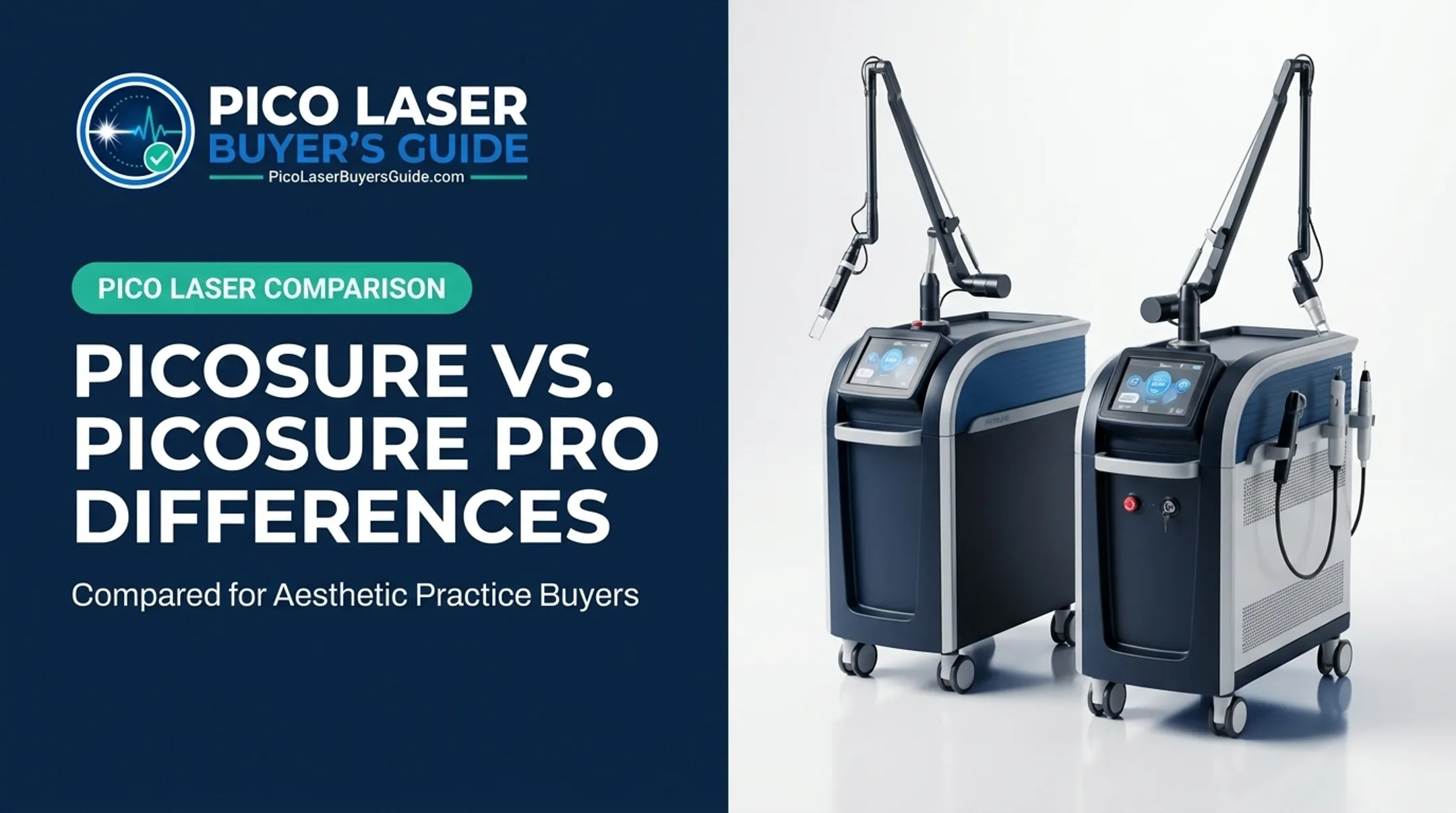
Both are Cynosure platforms. Cynosure's 2022 launch release positions Pro as an upgrade with 50% higher energy, new handpieces, and adjustable fluence, but it doesn't quantify a clinical improvement. Launch photographs show the original PicoSure, not Pro.
| Specification | PicoSure (2021 FDA 755 nm configuration) | PicoSure Pro (manufacturer documents) |
|---|---|---|
| Wavelengths | 755 nm; optional 532/1064 nm | 755 nm; optional 532/1064 nm |
| Pulse duration | 450-900 ps | 500-900 ps |
| Pulse energy | Not stated | 300 mJ ±20% |
| Maximum fluence | 6.37 J/cm² | 6.37 J/cm² |
| Spots | Zoom 2-6 mm | Zoom 2-6 mm; fixed 5/6/8/10 mm |
| Optics | Focus Array | Flat lens; Platinum Focus |
Pro figures come from Cynosure's international physician brochure, not a US quote, and pulse-width ranges differ between sources. Ask for a written US specification sheet.
When the original may still fit
- Lower acquisition cost
- Existing case mix doesn't need Pro's added energy or handpieces
- Good service support is available
- A suitable refurbished unit is on the market
Newer isn't automatically better for your menu. A public retrofit specification, serial eligibility list, or conversion price is hard to find, so confirm upgrade options directly with the manufacturer.
Decision framework
- Define treatment goals and the wavelengths they require.
- Estimate patient volume.
- Confirm the upgrade path, staff training, and room and power needs (Pro commonly requires 200-240 V).
- Compare warranty and service availability in writing.
- Request a live demonstration and a written spec sheet.

How Does PicoSure Compare With Other Pico Laser Platforms?
More wavelengths or higher energy do not automatically mean a better fit. Tie each spec to your planned services, such as multicolor tattoo removal, pigment, or scar protocols.
| Platform | Wavelengths / pulse duration | Max pulse energy | FDA clearance notes |
|---|---|---|---|
| PicoSure/Pro | 755 nm; optional 532/1064 | 300 mJ (Pro) | Pigment I-VI flat lens; scars/wrinkles I-IV |
| Candela PicoWay | 1064/532/730/785 nm: 450/375/250/300 ps | 400/200/100/100 mJ | K220853 (2022): tattoos/pigment; scars II-V; wrinkles and melasma with specified optics |
| Cutera enlighten III | 1064/532 nm: 750 ps; 670 nm: 660 ps | Not established | K182997 (2018): 1064 tattoos/pigment I-VI; 532 and 670 limited skin types |
| Quanta Discovery Pico | 1064 nm: 450/600/800 ps; 532 nm: 370/500/600 ps | Up to 800 mJ at 1064; 300 mJ at 532 | K240983 (2025): tattoos, pigment, wrinkles, fractional scars II-V |
Energy maxima aren't clinical benchmarks. Warranty and service terms vary by manufacturer, so request them in writing.
One head-to-head trial is available: a 2023 melasma RCT of 60 patients compared PicoWay 1064 nm against PicoSure 755 nm. Week-24 MASI improvement was 35.9% for PicoWay versus 25.5% for PicoSure. The study covers melasma only, not tattoos or scars, and does not include PicoSure Pro. In the PicoSure arm, recurrence was 2/20 and PIH 1/20 four months after the last session.
What Does a PicoSure Machine Cost to Buy and Own?
Acquisition pricing
Manufacturer list prices for a new PicoSure or PicoSure Pro are not published publicly. Planning figures for a new PicoSure Pro run $225,000-$300,000, with a separate comparison estimate near $200,000.
Optional 532 and 1064 nm systems are priced separately. Pre-owned pricing varies by configuration and isn't consistently public. Treat all of these as planning numbers, and insist on a written quote.
Total cost of ownership
Budget beyond the sticker price for:
- Shipping, site preparation, and installation
- Staff training and protective equipment
- Service contracts, preventive maintenance, and calibration
- Replacement handpieces and parts
- Financing charges and insurance
- Revenue lost during downtime
Cynosure's US service terms bill out-of-quote work at prevailing rates, give service workmanship and parts a 30-day warranty, and require written consent to assign a contract. Cynosure advertises 24-48 hour technical response for warranty and contract customers, which isn't the same as a finished repair. The PicoSure Pro includes a 1-year warranty.
Testing financial fit
Build your own case from monthly treatments, average price per treatment, session mix, staffing, consumables, maintenance, and realistic ramp-up.
As an illustration only, one calculator estimates $262,000 over five years ($52,400 a year at 6.5% financing, with $25 consumables per treatment), needing about 13 monthly treatments to cover annual cost. Payback depends on your volume and pricing, so run the numbers with your own inputs rather than a generic benchmark.

What Should Buyers Verify Before Purchasing a PicoSure Machine?
Pre-purchase checklist
- Exact model, serial number, and installed configuration
- Ownership history and manufacturer status
- FDA 510(k) documentation and cleared indications for that configuration
- Service and calibration records, plus pulse count or operating hours if available
- Warranty transferability, training, installation, and return or repair terms
FDA says servicing restores original specifications, while remanufacturing significantly changes them. Ask which one a refurbished unit has had. Request serial and service records from the seller, since buyers cannot check a unit through a public OEM serial-validation portal.
Evaluating vendors
- Request original manufacturer documentation
- Inspect the system or get a live demonstration
- Speak with comparable practices
- Confirm technician response times
- Identify who will service the device after the sale
Operator rules also vary by state. California, for example, limits laser treatments to physicians and supervised PAs or RNs.
Independent research resource
Pico Laser Buyer's Guide maintains a comparison library covering 16 pico laser platforms, with technical specification documents, manufacturer-backed sources, and procurement references. Disclosure: the guide has commercial relationships with certain manufacturers and distributors, including possible compensation for links or quote requests, and states this does not change how it reports specs or clearances. Use it to support research. It does not replace clinical, regulatory, or legal advice.
Frequently Asked Questions
How much does a PicoSure Pro machine cost?
Price varies by configuration, new versus pre-owned condition, handpieces, warranty, installation, training, and service. Planning estimates run $200,000-$300,000 for new systems. Get a written quote and calculate total ownership cost.
Where can I find a PicoSure machine for sale?
Options include Cynosure or authorized distributors, reputable pre-owned dealers, and direct practice-to-practice sales. Verify serial numbers, service history, warranty status, FDA documentation, and post-sale support.
How many sessions are needed for PicoSure laser?
It depends on indication, ink or pigment, skin type, settings, and response. One early tattoo trial averaged 4.25 sessions, an acne-scar study used six, and a melasma trial used three. None is a universal number.
Can pico laser remove pigmentation permanently?
Lasers may reduce targeted pigment but can't stop new pigment from forming. Melasma can last years, per the AAD, and sun protection matters. Pigmented lesions need diagnosis before treatment.
Is PicoSure the same as PicoSure Pro?
They're in the same product family but differ in hardware, energy, handpieces, and labeled applications. Verify your exact model with current Cynosure documentation.